
Square cropping means composing or editing a photo into a 1:1 frame, where the width and height are equal. Its strength is simplicity: the square removes the push of horizontal or vertical space and asks the viewer to focus on balance, shape, subject placement, and visual weight. Rediscovering square cropping is useful because it can turn cluttered images into cleaner compositions, make ordinary subjects feel more intentional, and help beginners see framing decisions more clearly.
Quick Answer
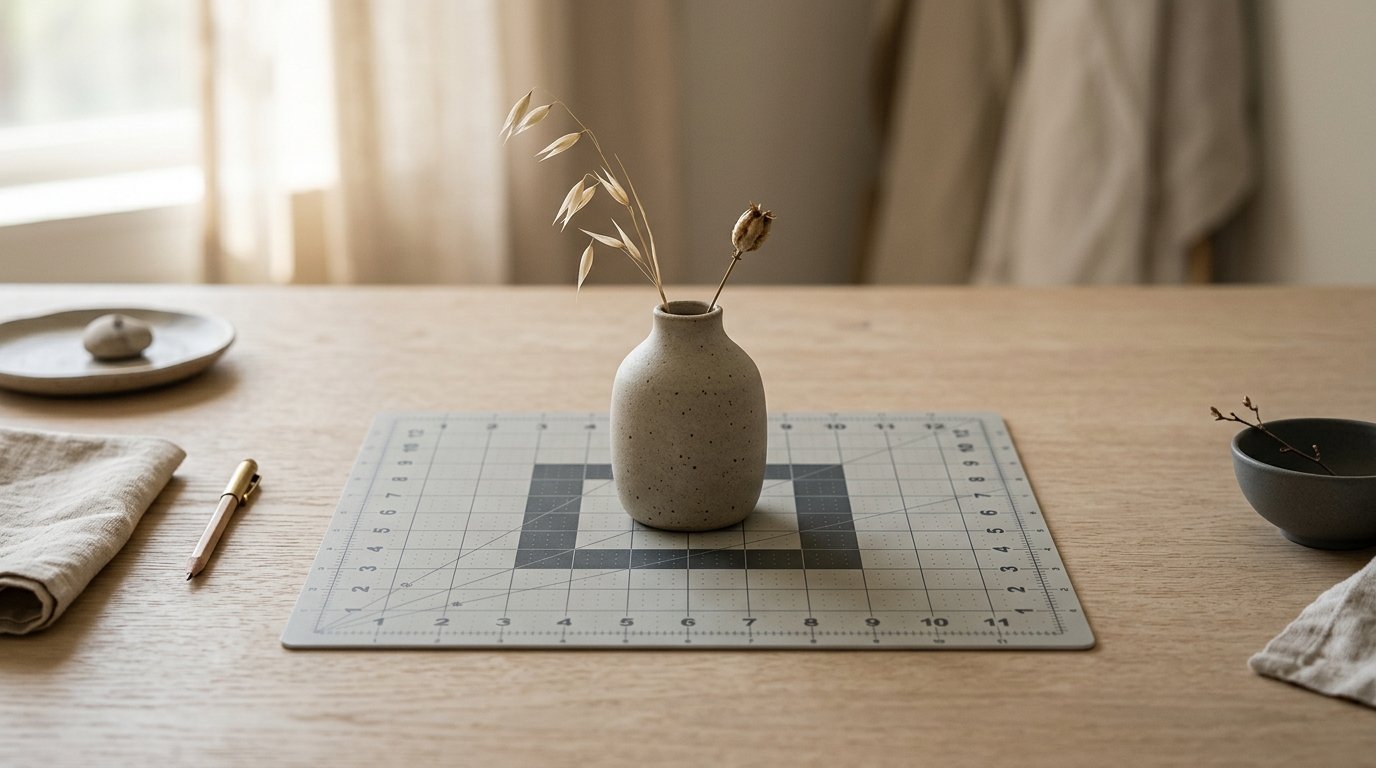
The main takeaway: square cropping works because it creates a calm, balanced frame that naturally emphasizes the subject. Unlike a wide rectangle, which often suggests movement across the scene, or a vertical frame, which emphasizes height, the square feels contained. It keeps attention inside the image.
This makes square cropping especially useful when your photo has one clear subject, strong symmetry, centered composition, repeating shapes, or distracting space near the edges. A portrait with too much background, a still life on a table, a doorway, a window, a flower, a building detail, or a minimal landscape can all become stronger in a 1:1 crop.
The square frame also encourages deliberate composition. Because each side has equal importance, you cannot rely as much on “extra room” to make the image work. The placement of the subject, the corners, and the negative space all become more noticeable.
Use square cropping when:
- The subject looks strongest when centered or balanced.
- The original frame has empty or distracting side space.
- The image depends on shapes, patterns, or symmetry.
- You want a quieter, more graphic composition.
- You are editing an existing photo and want to simplify it.
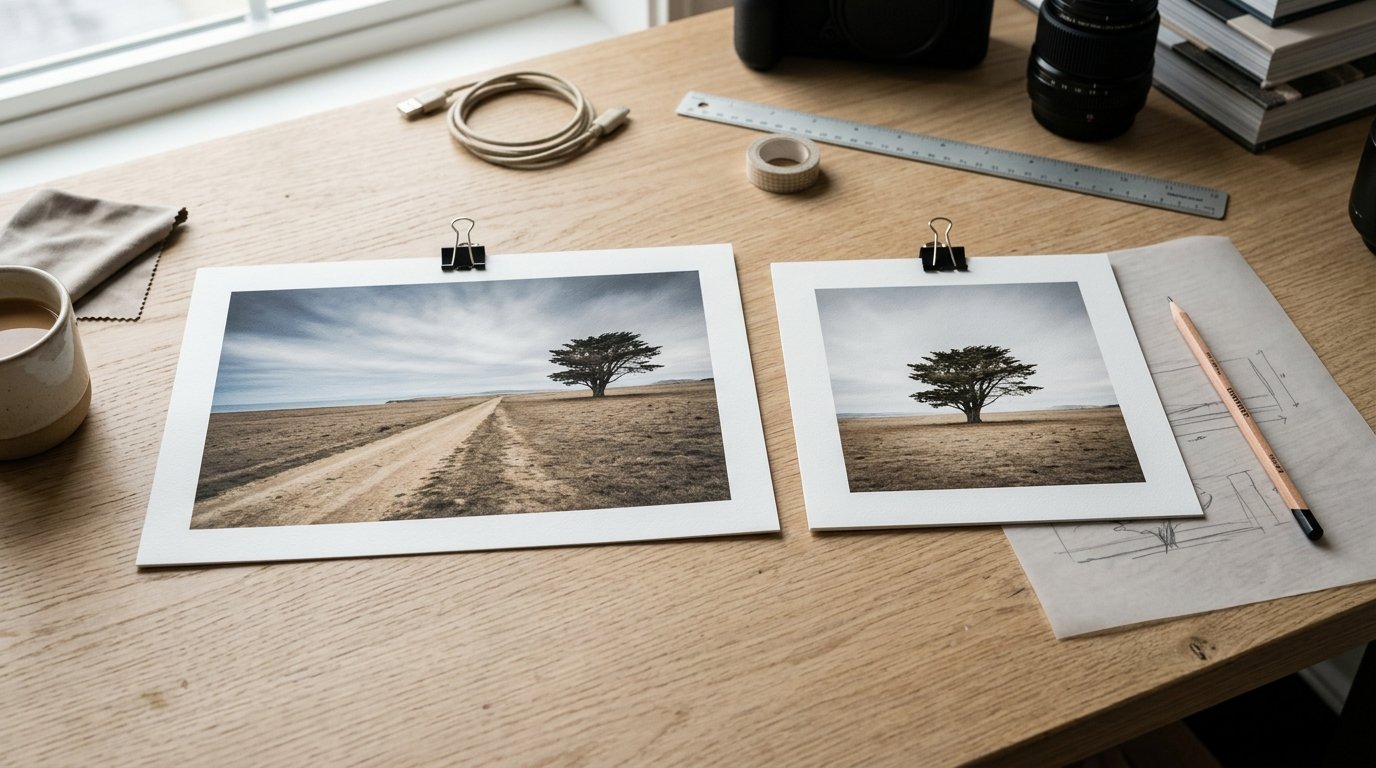
Avoid it when the scene needs width, direction, or scale. A sweeping mountain view, a runner moving through space, or a tall tree may lose impact if forced into a square. Square cropping is powerful, but it works best when the subject benefits from containment.
How to Think About This Topic
A helpful mental model for rediscovering square cropping is this: a rectangle often asks, “Where is the subject going?” A square asks, “How is the subject held?”
That difference changes how a viewer reads the photo. In a horizontal frame, the eye often travels left to right. In a vertical frame, the eye often moves up and down. In a square frame, the eye tends to circle around the center, corners, and edges. This makes the square excellent for images built around balance, stillness, repetition, or a strong central idea.
For beginners, the square crop can also be a training tool. It forces you to notice whether every part of the frame is helping the photo. If the top left corner is messy, it stands out. If the subject is slightly off-center, that choice feels more obvious. If there is too much dead space, the image may feel unfinished. The equal sides make composition easier to judge.
Square cropping does not mean every subject must be centered. Centered subjects often work well in a square, especially faces, flowers, doors, plates of food, and product-style still life images. But off-center placement can also be strong if the negative space feels intentional. For example, a person looking into empty space can work beautifully in a square if the face and the empty area balance each other.
The key is visual weight. A dark object, a bright color, a face, a sharp edge, or a high-contrast detail carries more visual weight than a plain background. In a square crop, you are arranging that weight inside a compact box. If one corner feels too heavy or one side feels empty without purpose, adjust the crop.
This is why square cropping is not just a social media format. It is a composition decision. It can make a photo feel more focused, graphic, intimate, or calm. When you are wondering whether a square crop fits, ask: “Does this image get stronger when I remove directional space?” If the answer is yes, the 1:1 frame is probably worth trying.
Practical Guidance
Start with the subject. Before cropping, identify what the photo is really about. Is it a face, a gesture, a building shape, a flower, a reflection, or a pattern? A square crop works best when that answer is clear. If the photo has too many competing subjects, cropping alone may not fix it.
Next, look at the edges. In a square composition, edges and corners matter because there is less room to hide distractions. Remove half-objects, bright clutter, awkward empty strips, and background details that pull attention away from the subject.
Then decide whether the crop should be centered or balanced off-center. Centering is often effective for portraits, still life, architecture, and symmetrical subjects. Off-center placement works when the subject needs breathing room, such as a person looking sideways or a small figure in a quiet landscape.
Here is a quick guide for matching subjects to square cropping:
| Subject type | When square cropping works well | What to watch for |
|---|---|---|
| Portraits | Face, expression, or shoulders are the focus | Avoid cutting joints or leaving cramped headroom |
| Still life | Objects form a simple arrangement | Keep background edges clean |
| Architecture | Doors, windows, arches, stairs, or symmetry stand out | Correct distracting tilt if needed |
| Landscapes | The scene has one strong focal point | Avoid losing scale or wide atmosphere |
| Existing-photo edits | The original has cluttered side space | Do not crop so tightly that context disappears |
For portraits, try placing the eyes near the upper third of the square, not necessarily in the exact center. This gives the face structure while leaving enough room around the head. A tight square headshot can feel intimate, while a looser square portrait can feel calm and editorial.
For still life, use the square to organize shapes. A coffee cup, book, and pair of glasses can look ordinary in a wide frame but intentional in a square if the objects create a triangle or balanced cluster. Leave enough negative space so the arrangement can breathe.
For architecture, square cropping is excellent for graphic details. Doors, windows, tiled walls, staircases, and building corners often suit the 1:1 frame because they rely on lines and geometry. Symmetry can be centered, but slight asymmetry can add energy.
For landscapes, be selective. A square crop can work when there is a single tree, rock, cabin, moon, reflection, or person anchoring the scene. It is less ideal when the main appeal is a broad horizon or dramatic width.
When editing existing photos, make several square versions instead of accepting the first crop. Try a centered crop, a tighter crop, and an off-center crop. Compare which version makes the subject easiest to understand. The best square crop usually feels simple, but not empty; focused, but not cramped.
FAQ
What Should a Beginner Know First About Rediscovering Square Cropping?
Start by thinking of square cropping as a way to simplify composition. It is not just a format for posting online. The 1:1 frame helps remove distractions, emphasize balance, and make the subject feel more deliberate.
What Matters Most When Evaluating Rediscovering Square Cropping?
The most important question is whether the photo becomes stronger when extra width or height is removed. Check the subject, edges, corners, and negative space. If the image feels cleaner and more focused, the square crop is helping.
What Mistakes Should Readers Avoid with Rediscovering Square Cropping?
Avoid forcing every image into a square. Some photos need width, height, direction, or environmental context. Also avoid cropping too tightly around faces, cutting important details, or leaving awkward empty space that does not support the composition.
What Is the Next Logical Step After Learning About Rediscovering Square Cropping?
Choose ten existing photos and make square versions of each. Compare the original and cropped frames side by side. Notice which subjects improve, which lose impact, and how small changes in subject placement affect balance.