
Photographing strangers is one of the most rewarding—and nerve-racking—parts of street photography. The goal is not to “take” something from people, but to notice real human moments and photograph them with care. Start by preparing your camera so you are not fumbling. Observe before shooting. Decide whether the situation calls for a candid photo or a polite request. If you ask, be clear and brief. If someone says no, thank them and move on. The best mindset is simple: respect the person first, then make the photograph. Confidence comes from practice, not force.
Start with the Right Mindset
A good street photograph is not just a picture of a stranger. It is a picture of a moment: a gesture, expression, patch of light, relationship, or small story happening in public.
Before you lift the camera, ask yourself: What am I actually photographing? If the answer is only “that person looks unusual,” slow down. Look for context that gives the image meaning, such as a commuter framed by reflections, a vendor arranging fruit, or friends laughing under harsh afternoon light.
This mindset keeps you from treating people like targets. You are observing public life, not hunting faces. That shift alone makes your body language calmer and your decisions more respectful.
Know the Difference Between Legal, Ethical, and Comfortable
In many places, photographing people in public is generally allowed, but laws vary by country, city, and use of the image. This article is not legal advice, so check local rules, especially for commercial use, private property, children, protests, and sensitive locations.
Even when a photo is legal, it may not be ethical or comfortable. A person in distress, someone receiving medical help, or a vulnerable person sleeping in public may be visible, but that does not mean you should photograph them.
Think in three layers:
| Question | What it means |
|---|---|
| Is it legal? | Am I allowed to photograph here? |
| Is it ethical? | Would this image unfairly exploit someone? |
| Is it comfortable? | Can I take this photo without creating fear or pressure? |
Respect lives in all three.
Choose Your Approach: Candid or Permission-based
Before raising your camera, choose your approach. Candid photography works best when the scene depends on a natural moment: someone walking through beautiful light, a gesture in a crowd, or a layered composition where the person is part of the larger scene.
Permission-based photography works best when the person is clearly the subject. For example, if you want a close portrait of a shop owner, musician, cyclist, or stylish stranger, asking first is usually the better choice.
A simple guide:
| Situation | Better approach |
|---|---|
| Wide street scene with people passing through | Candid |
| Close portrait of one person | Ask permission |
| Emotional or sensitive moment | Usually do not shoot, or ask with care |
| Street performer or vendor | Ask, tip, or buy something when appropriate |
Choosing early reduces hesitation and helps you act with purpose.
Prepare Your Camera Before You Approach Anyone
Nervousness gets worse when your camera is not ready. Set it up before you enter a busy area.
For beginners, aperture priority mode is a strong choice. Try f/5.6 or f/8 for enough depth of field, Auto ISO with a maximum you are comfortable with, and a minimum shutter speed around 1/250 for walking subjects. In darker streets, use f/2.8 or f/4 if your lens allows it.
If you prefer manual mode, start with 1/250, f/5.6, and Auto ISO. Use continuous autofocus for moving people and single-point or zone focus depending on your camera.
A 35mm or 50mm equivalent lens is ideal because it feels natural and does not force you too far away. Avoid starting with a long telephoto just to hide; it can make your photos feel detached.
How to Ask a Stranger for a Photo
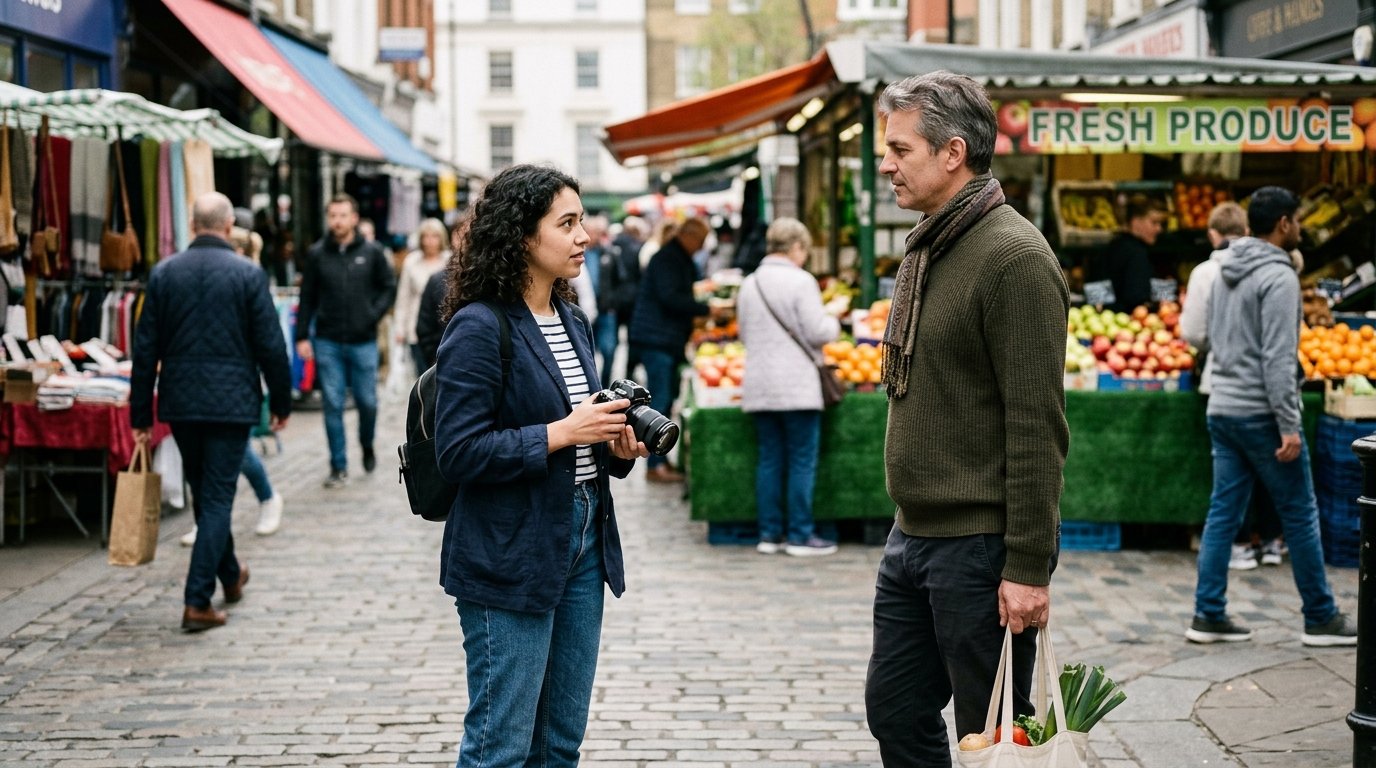
Asking is easier when you keep it short, honest, and low pressure. Do not begin with a long explanation while pointing the camera at someone’s face.
Try this step-by-step approach:
- Approach from the front or side, not from behind.
- Smile and keep your camera lowered.
- Give a quick reason.
- Ask clearly.
- Accept the answer immediately.
A simple script:
“Hi, I’m practicing street portraits today. I really like the way the light is hitting your jacket. Would you mind if I made a quick photo?”
If they say yes, give one or two clear directions: “Could you stand just there for the light?” or “Look slightly past me.” Take a few frames, thank them, and do not overstay.
If they ask what it is for, be honest: “It’s a personal photography practice project” or “I’m building confidence with street portraits.” Honesty builds trust faster than sounding overly professional.
How to Photograph Candidly Without Being Intrusive
Respectful candid photography is not about sneaking. It is about being present, calm, and aware of boundaries.
Use wider scenes when you are starting out. Photograph people as part of the environment: crossing streets, waiting at bus stops, walking through shadows, or interacting with signs, windows, and weather. This makes the image more about the scene than about invading someone’s personal space.
Avoid sudden movements. Bring the camera up smoothly, take the frame, and lower it. Do not chase people, block their path, or keep shooting if they notice you and look uncomfortable.
If someone makes eye contact after you take a photo, a small nod or smile can defuse tension. If they ask what you are doing, answer calmly: “I’m working on a street photography project. I liked the light and the moment.”
Handle Rejection and Awkward Moments Gracefully
Rejection is normal. It does not mean you did anything wrong. Some people dislike being photographed, are busy, or simply do not feel like engaging.
If someone says no, say: “No problem at all. Thanks anyway.” Then leave. Do not explain, argue, or try to change their mind.
If someone asks you to delete a photo, your legal rights may vary, but as a beginner building confidence, consider deleting it unless the image is important and the situation is calm. Protecting your comfort and reputation matters.
Awkward moments pass quickly when you stay polite.
A Beginner Assignment for Photographing Strangers
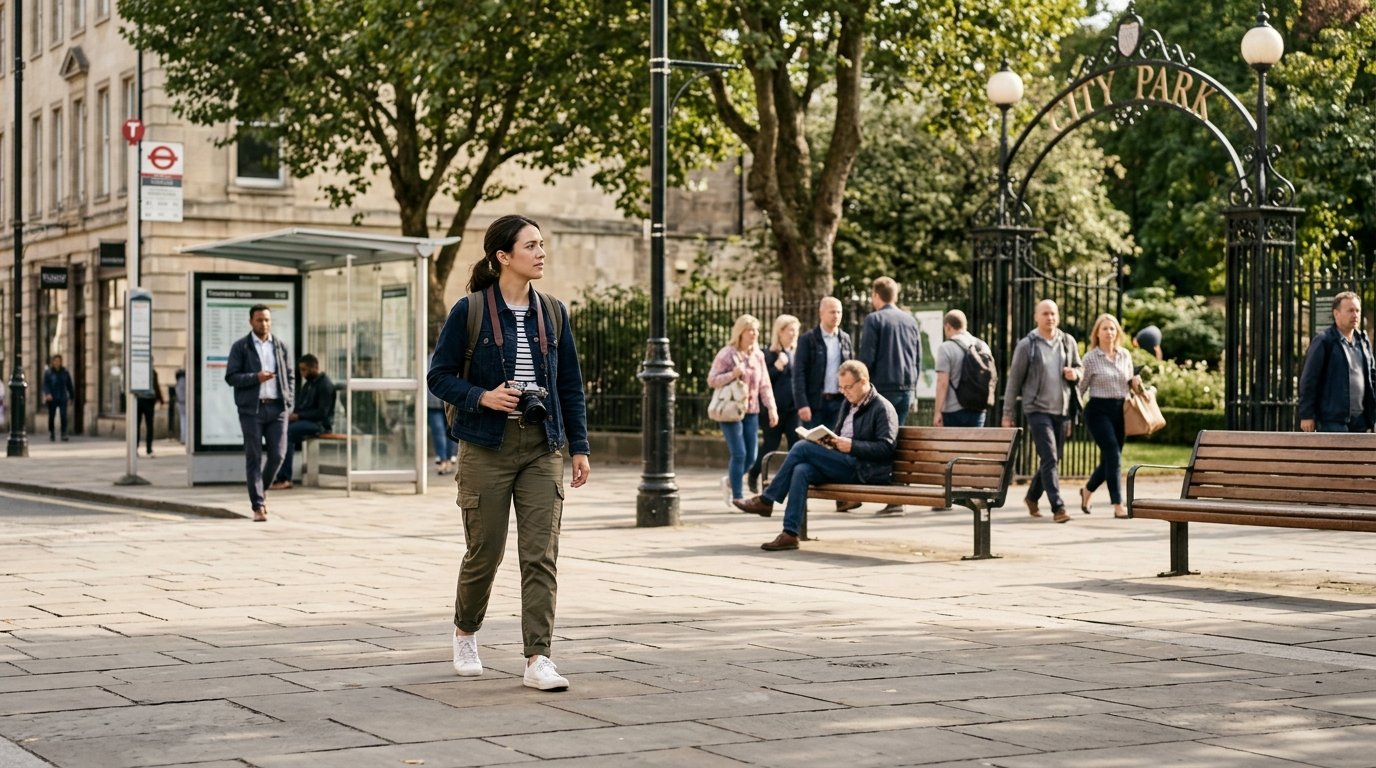
Try this photographing strangers new assignment over one hour in a public area with good light, such as a market, downtown street, park path, or transit area.
Your goal is not to get perfect photos. Your goal is to practice respectful decisions.
Part 1: Observation, 15 minutes
Do not shoot yet. Watch light, backgrounds, movement, and gestures. Notice where people naturally pause.
Part 2: Candid scenes, 25 minutes
Make 20 frames where strangers are part of a broader scene. Use f/5.6 or f/8, 1/250 or faster, and avoid getting too close.
Part 3: One permission portrait, 10 minutes
Ask one person for a quick portrait using the script above. If they say no, ask one more person.
Part 4: Review, 10 minutes
Pick three images and write why each one works or fails. Focus on timing, background, light, and respect.
Common Mistakes to Avoid
Do not start too close. Begin with wider scenes until your confidence improves.
Do not hide your behavior. Acting secretive often looks more suspicious than simply photographing calmly.
Do not overshoot one person. Take a few frames and move on.
Do not photograph vulnerable moments just because they look dramatic.
Do not rely on gear to solve fear. A smaller camera may help, but confidence comes from repetition, courtesy, and knowing what you are trying to photograph.
FAQ
Is It Okay to Photograph Strangers in Public?
Often, yes, but it depends on local laws, location, and how the image will be used. Public photography may be allowed while still requiring judgment. Avoid sensitive situations, respect private property rules, and be especially careful with children, distress, or commercial usage.
Should I Ask Before Photographing a Stranger?
Ask when the person is the clear subject, especially for close portraits. Candid photos can be appropriate for broader street scenes where people are part of public life. If the moment feels personal, vulnerable, or confrontational, asking—or not photographing—is usually wiser.
What Camera Settings Are Best for Photographing Strangers?
A good beginner setup is aperture priority at f/5.6 or f/8, Auto ISO, and a minimum shutter speed of about 1/250. For low light, open the aperture to f/2.8 or f/4. Use continuous autofocus for movement and keep your camera ready.
How Do I Become More Confident Photographing Strangers?
Practice in small steps. Start with wide scenes, then photograph busier areas where your camera attracts less attention. Next, ask one person for a simple portrait. Use a short script, accept rejection politely, and review your photos for light, timing, and respectful distance.