
Choosing the best lens is less about finding the “highest quality” lens and more about matching a lens to what you actually photograph. A great portrait lens may be frustrating for wildlife. A wide travel zoom may be weak for low-light indoor sports. A sharp macro lens may not be the best everyday walkaround choice.
The practical framework is simple: start with your subject, confirm your camera mount and sensor size, choose a useful focal length range, decide how much aperture you need, then compare features such as stabilization, autofocus, size, weather sealing, and price. If you follow that order, you will avoid most beginner buying mistakes.
Quick Answer
The best lens for you is the one that fits your camera system, matches your main photography style, and solves a real limitation in your current setup. Do not start by asking, “What is the sharpest lens?” Start by asking, “What do I want to photograph, and what can’t my current lens do well?”
For most beginners, a good first upgrade is one of these:
| Photography need | Practical lens choice |
|---|---|
| Everyday photos, travel, family | Standard zoom, such as 18-55mm, 18-135mm, 24-70mm, or 24-105mm equivalent |
| Portraits and blurred backgrounds | Fast prime, such as 35mm, 50mm, or 85mm equivalent |
| Landscapes, interiors, architecture | Wide-angle zoom or prime |
| Wildlife and field sports | Telephoto zoom, such as 70-300mm, 100-400mm, or similar |
| Food, products, small details | Macro lens |
| Video and handheld shooting | Lens with quiet autofocus and stabilization, if your camera lacks it |
Before buying, check three things. First, make sure the lens mount fits your camera. A Canon RF lens will not directly fit a Nikon Z camera, and a Sony E lens will not fit a Fujifilm X camera. Second, consider sensor size. A 50mm lens looks tighter on APS-C than on full frame. Third, decide whether you need a zoom for flexibility or a prime lens for better low-light performance, smaller size, and stronger background blur.
If you are unsure, choose based on your most common subject. A lens you use every week is better than a technically impressive lens that stays in your bag.
How to Think About This Topic
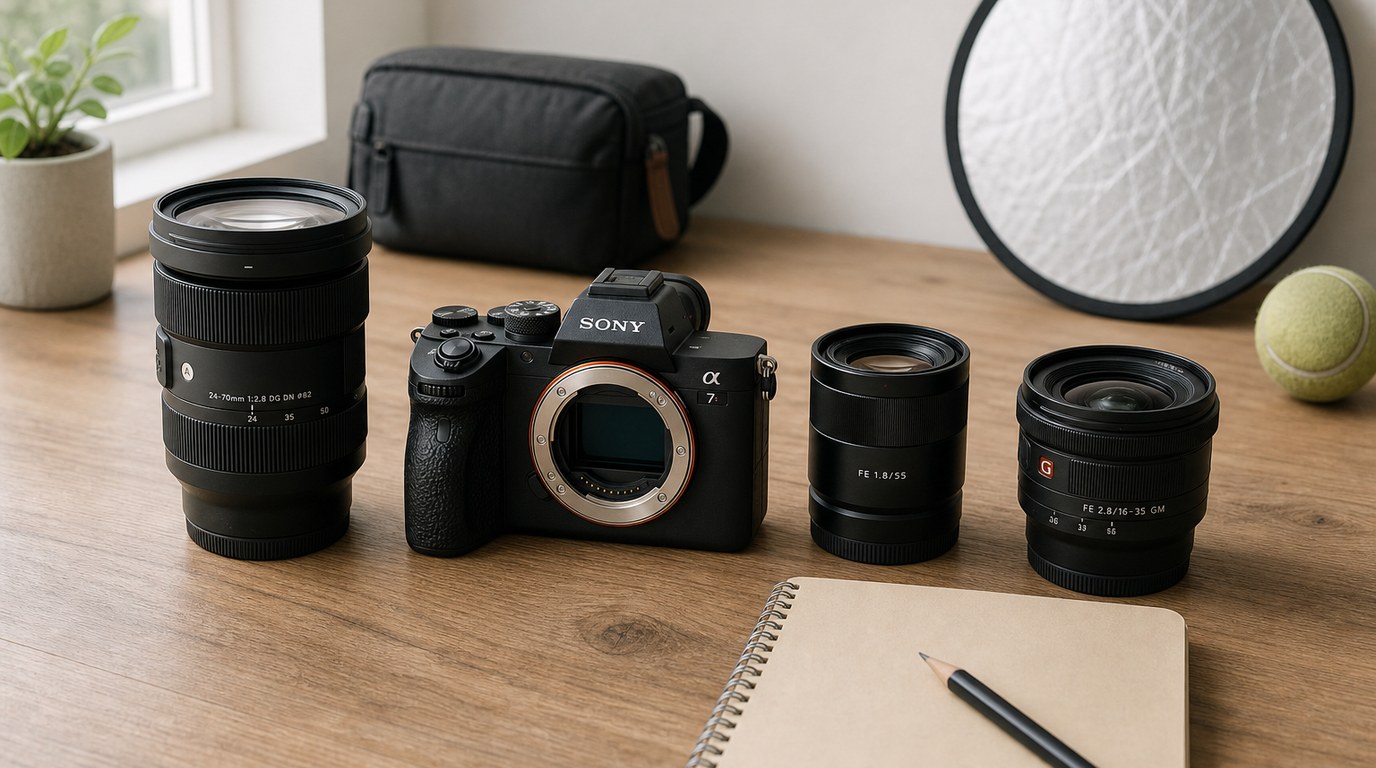
The clearest way to choose the best lens is to think in layers: subject first, compatibility second, focal length third, aperture fourth, features and budget last. This keeps you from being distracted by marketing terms or specifications that may not matter for your photography.
Start with your subject because lenses are tools for framing distance and perspective. If you photograph children indoors, you need something different from someone photographing birds across a lake. If you shoot landscapes while hiking, size and wide-angle coverage may matter more than extreme background blur. If you make YouTube videos, autofocus noise and stabilization may matter more than maximum sharpness in the corners.
Next, check compatibility. Every interchangeable-lens camera uses a specific lens mount. Mirrorless systems and DSLR systems also use different mounts, even within the same brand. Adapters can work in some cases, but beginners should usually buy native lenses unless they understand the tradeoffs. Native lenses are more likely to autofocus properly, communicate with the camera, support stabilization features, and receive firmware support.
Sensor size changes how a lens feels. A 50mm lens on a full-frame camera gives a natural short-telephoto view, often useful for portraits and everyday details. On APS-C, it behaves more like a 75mm equivalent lens, which is tighter and less convenient indoors. Micro Four Thirds has a 2x crop factor, so a 25mm lens gives a similar angle of view to 50mm on full frame. When comparing recommendations, look for “equivalent focal length” if you use a crop-sensor camera.
Focal length controls how much of the scene fits in the frame. Wide-angle lenses, such as 16mm, 20mm, or 24mm full-frame equivalent, include more of the scene and are useful for landscapes, architecture, interiors, and vlogging. Normal focal lengths, around 35mm to 50mm equivalent, feel natural and work well for daily life, street photography, travel, and family photos. Telephoto focal lengths, such as 85mm, 135mm, 200mm, and beyond, magnify distant subjects and compress backgrounds, which helps with portraits, wildlife, sports, and stage events.
Aperture controls both light and depth of field. A lens with a wide maximum aperture, such as f/1.8, f/1.4, or f/2.8, lets in more light and can create blurrier backgrounds. This is helpful for portraits, weddings, concerts, indoor events, and night scenes. A variable-aperture zoom, such as f/3.5-5.6 or f/4.5-6.3, is usually smaller and cheaper, but it gathers less light at the long end. That is fine outdoors, but limiting in dim rooms or fast action.
Zooms and primes involve a tradeoff. Zoom lenses cover multiple focal lengths, so they are convenient for travel, events, and situations where you cannot move freely. Prime lenses have one focal length, but they are often sharper, brighter, smaller, or less expensive than zooms with similar image quality. A beginner with only a kit zoom may benefit from adding a 35mm or 50mm f/1.8 prime because it immediately improves low-light shooting and background blur.
Finally, remember that “best” also includes practical use. A large professional zoom may deliver excellent image quality, but if it is too heavy to carry, it may be the wrong choice. A weather-sealed lens may be worth it for hiking, travel, and outdoor sports. Optical stabilization may be valuable for handheld video or still subjects in low light, but less useful for freezing moving athletes. The right lens is a balance of image quality, usefulness, comfort, and price.
Practical Guidance
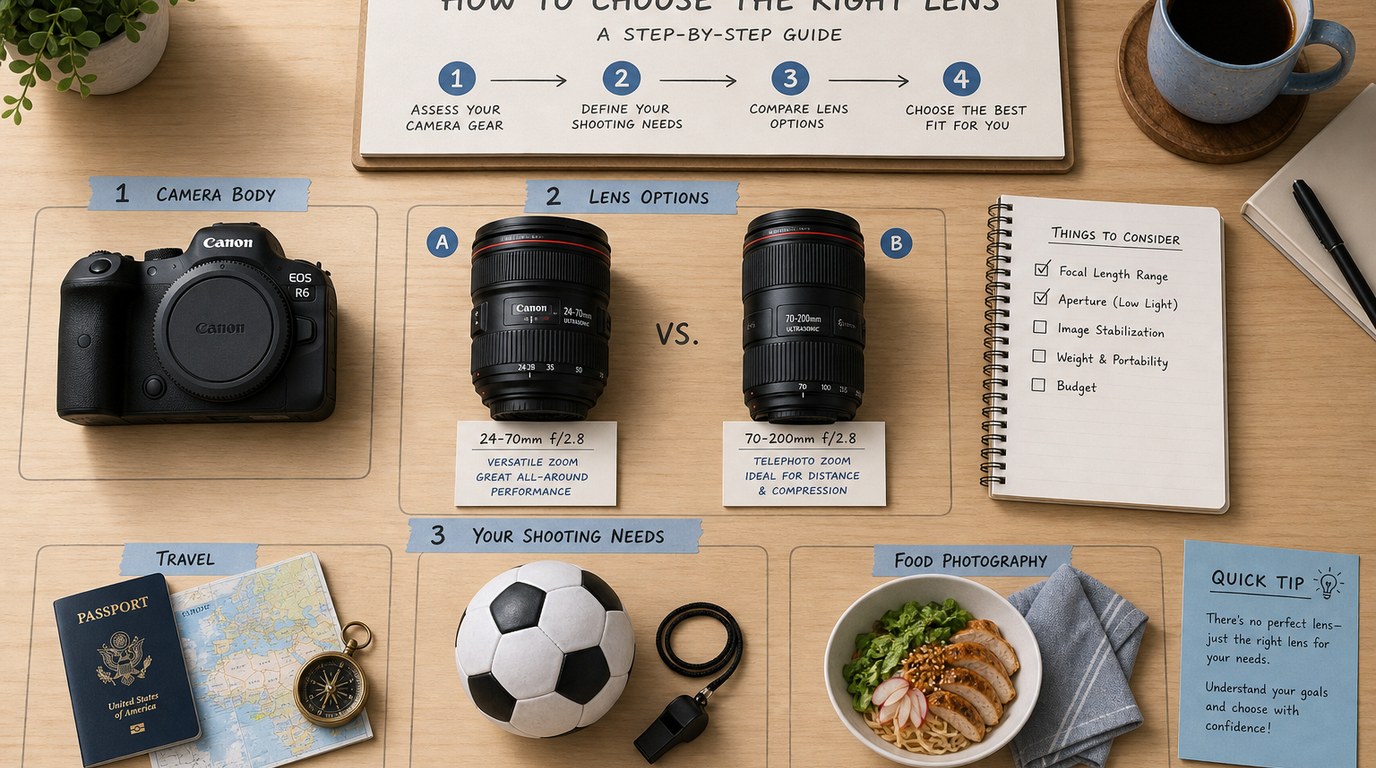
Use a simple buying process before you compare individual lens reviews.
First, list your top three subjects. Be specific. “Travel” might mean city streets, landscapes, food, and portraits. “Sports” might mean daytime soccer from the sidelines or indoor basketball from the stands. These details affect focal length and aperture. If most of your photos are people indoors, a fast prime or constant-aperture zoom is more useful than a slow superzoom. If most are outdoor trips, a compact wide-to-standard zoom may be better.
Second, identify what your current lens cannot do. If your kit lens feels too narrow for landscapes, look at wide-angle options. If it cannot zoom far enough for wildlife, look at telephoto zooms. If your indoor photos are blurry or noisy, you may need a wider aperture, not more zoom. If your portraits lack background separation, consider a fast 50mm or 85mm equivalent lens.
Third, choose a focal length category:
- Wide-angle: Good for landscapes, real estate, interiors, environmental portraits, and vlogging.
- Standard: Good for everyday photography, travel, family, street, and general use.
- Short telephoto: Good for portraits, events, detail shots, and subject separation.
- Long telephoto: Good for wildlife, sports, birds, aviation, and distant subjects.
- Macro: Good for flowers, insects, product details, textures, jewelry, and close-up work.
Fourth, decide how much aperture you need. If you often shoot in daylight, a smaller maximum aperture may be fine. If you shoot indoors, at night, or want strong background blur, prioritize f/1.8, f/1.4, f/2, or f/2.8 lenses. For events, a 24-70mm f/2.8 or 70-200mm f/2.8 equivalent is popular because it combines zoom flexibility with useful low-light performance. For casual portraits, a 50mm f/1.8 is often a much cheaper path to attractive results.
Fifth, consider autofocus and stabilization. Fast, accurate autofocus matters for children, pets, sports, wildlife, and video. Quiet autofocus matters if you record audio while filming. Stabilization helps reduce camera shake for handheld stills and smoother video, especially at longer focal lengths. However, stabilization does not freeze subject motion. For moving people or sports, you still need a fast shutter speed and enough light.
Sixth, think about size and weight. Many photographers buy ambitious lenses and then avoid carrying them. If you travel often, hike, photograph family outings, or shoot casually, a smaller lens may help you take more photos. A compact 35mm prime or lightweight travel zoom can be more valuable than a heavy professional lens that stays home.
Seventh, set a realistic budget. Lenses often last longer than camera bodies, so it can make sense to invest in a good one. But beginners should avoid overspending before they understand their style. Buying used from a reputable dealer can stretch your budget. Third-party lenses can also offer excellent value, as long as they are compatible with your camera mount and support the features you need.
Here are practical examples:
If you own an APS-C camera with an 18-55mm kit lens and want better portraits, look at a 50mm f/1.8 or a 56mm-style portrait prime. If you want a wider everyday view indoors, a 30mm or 35mm equivalent prime may be easier to use.
If you shoot travel and want one lens, a standard zoom with a broad range may be the best compromise. Something like an 18-135mm, 24-105mm equivalent, or similar lens gives flexibility without changing lenses constantly.
If you photograph birds or wildlife, do not buy a short portrait lens because it has great reviews. You need reach. A 70-300mm may be an affordable starting point, while 100-400mm or longer lenses are better for serious wildlife.
If you shoot video, look for smooth autofocus, low focus breathing if possible, stabilization, and a focal length that works at arm’s length or on a tripod. A lens that is excellent for still portraits may be too tight for handheld vlogging.
Before purchasing, use this quick checklist:
- Does it fit my camera mount?
- Is the focal length right for my main subject?
- Is the aperture wide enough for my lighting and background blur needs?
- Is the autofocus suitable for my subjects?
- Do I need stabilization?
- Is the size realistic for how I shoot?
- Does it improve on a limitation I actually have?
- Is the price reasonable compared with how often I will use it?
If the answer to most of these is yes, the lens is probably a smart choice.
FAQ
What Should a Beginner Know First About How to Choose the Best Lens?
A beginner should know that the best lens depends on the subject, not just image quality. Start with what you photograph most: portraits, travel, wildlife, video, landscapes, or close-ups. Then match focal length, aperture, and features to that use.
What Matters Most When Evaluating How to Choose the Best Lens?
Compatibility, focal length, aperture, autofocus, stabilization, size, and budget matter most. Compatibility comes first because the lens must fit your camera. After that, focal length determines framing, while aperture affects low-light ability and background blur.
What Mistakes Should Readers Avoid with How to Choose the Best Lens?
Avoid buying only because a lens is popular, expensive, or extremely sharp. Also avoid ignoring sensor size, mount compatibility, and weight. A lens that is wrong for your subject or too heavy to carry is not a good upgrade.
What Is the Next Logical Step After Learning About How to Choose the Best Lens?
Check your camera mount, review your favorite photos, and identify what your current lens cannot do. Then compare two or three lenses in the right category, read sample-based reviews, and if possible, rent or test the lens before buying.