
Shopping for a DSLR lens gets much easier when you ignore marketing first and answer four questions: what do you shoot, what camera body do you own, what framing do you want, and how much convenience matters to you. A lens is not “good” in the abstract. It is good for portraits, travel, wildlife, indoor sports, or everyday family photos. After that, check compatibility, focal length, lens type, and maximum aperture. Then look at autofocus, stabilization, size, and price. Beginners often overspend on features they rarely use or buy a lens that does not fit their shooting style. The goal is not to find the most impressive lens on paper. It is to find the one you will actually carry, enjoy, and use often enough to improve your photos.
Start with What You Actually Want to Shoot
The best lens choice starts with your subject, not the brand name or the widest aperture in the store. A lens for portraits solves a different problem than a lens for birds, travel, or kids running around indoors.
Think in terms of shooting scenarios. If you mainly photograph people, you may want a lens that flatters faces and can blur the background. If you shoot landscapes, wider framing matters more. If you like sports or wildlife, reach and autofocus speed become priorities. For travel, weight and flexibility often matter more than extreme image quality.
A simple way to narrow your options is to match your most common use to the lens traits that help most:
| What you shoot | Lens type often suited | Specs to prioritize |
|---|---|---|
| Family, everyday photos | Standard zoom | Useful range, good autofocus, manageable size |
| Portraits | Short telephoto prime or fast zoom | Wide aperture, flattering focal length |
| Landscapes, interiors | Wide-angle lens | Wider focal length, edge sharpness, lighter kit |
| Sports, wildlife | Telephoto zoom | Long reach, fast autofocus, stabilization |
| Travel | Compact zoom or small prime | Low weight, versatility, durability |
| Low-light indoor scenes | Fast prime | Wide maximum aperture, reliable autofocus |
Once you know your main use, the rest of the buying decisions become much more logical.
Make Sure the Lens Fits Your Camera Body
Compatibility is the first practical filter, and it saves many beginners from buying the wrong lens. DSLR lenses are not universally interchangeable just because they look similar.
Start with the lens mount. Canon EF and EF-S lenses are for Canon DSLRs, while Nikon F-mount lenses are for Nikon DSLRs. Within a brand, you also need to check whether the lens is made for full-frame or APS-C cameras. Many APS-C DSLR bodies can use both crop-sensor lenses and some full-frame lenses, but the reverse is not always true.
Sensor size matters because it affects field of view. A 50mm lens on an APS-C camera looks tighter than it does on a full-frame body. That does not make the lens incompatible, but it changes how it behaves in practice.
Also check autofocus support. Some older DSLR bodies have limits with certain lenses, and third-party options from Sigma, Tamron, or Tokina may have different versions for different mounts. Before buying, confirm mount type, sensor coverage, and autofocus compatibility on the manufacturer’s product page. It takes two minutes and can prevent an expensive mistake.
Choose the Right Focal Length for the Look You Want
Focal length controls how wide or tight your framing appears, but it also affects working distance and the overall feel of the image. This is one of the most important lens decisions because it shapes how you shoot.
Wide-angle lenses, such as 10-24mm on APS-C or 16-35mm on full frame, fit more into the scene. They are useful for landscapes, travel, interiors, and dramatic close-up compositions. The tradeoff is that they can stretch features or make people near the edge look distorted.
Standard focal lengths, around 35mm to 50mm, feel natural for everyday photography. They are popular for street, travel, and family photos because they are flexible without looking overly wide or too compressed.
Short telephoto focal lengths, such as 85mm or 70-200mm, are common for portraits and events. They let you step back a bit, flatter facial features, and isolate the subject more easily. Longer telephoto lenses are ideal when you cannot physically get closer, such as at sports fields or when photographing wildlife.
If you are unsure, review your recent photos or phone images. Do you usually step in close, back up often, or wish you could zoom farther? Your habits reveal the focal length range that will feel most natural.
Prime Vs Zoom: Decide Between Simplicity and Flexibility
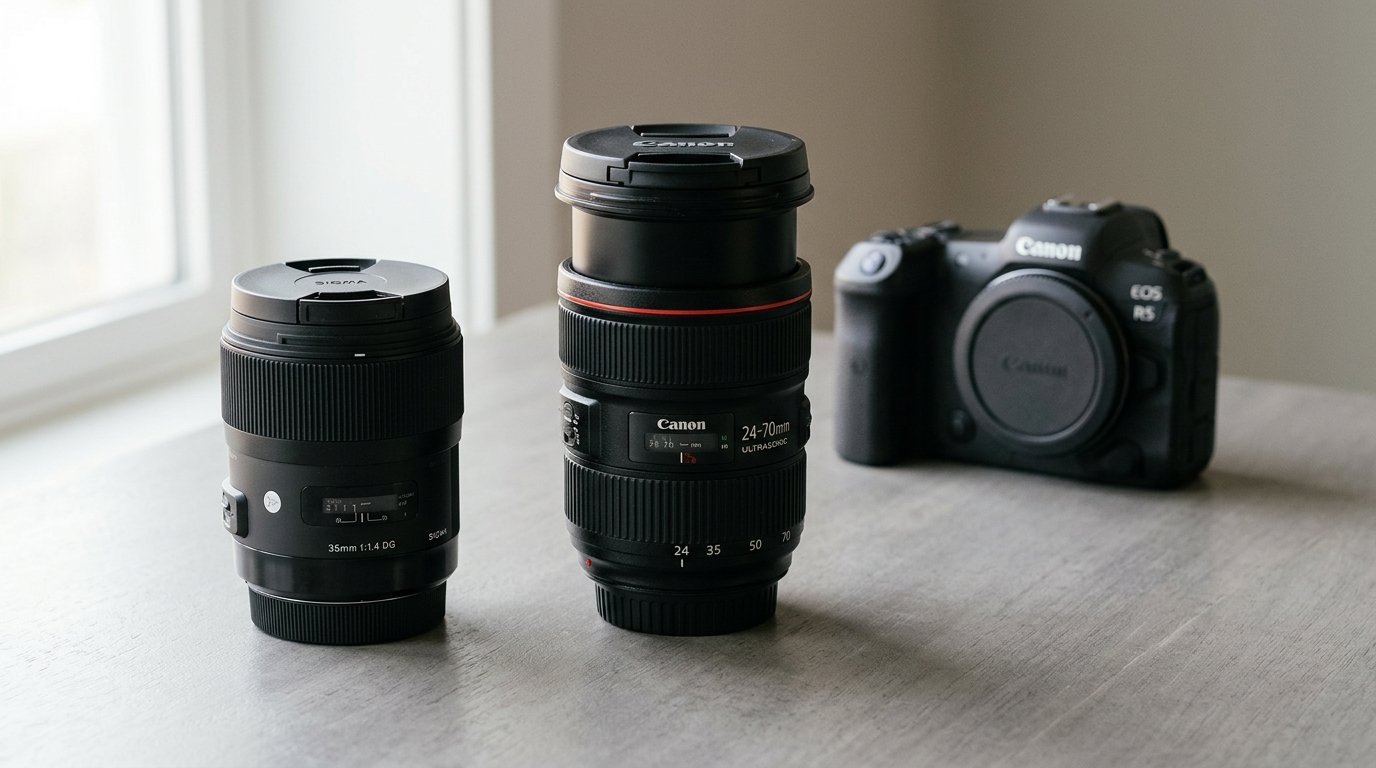
One of the biggest lens-shopping choices is whether to buy a prime lens or a zoom lens. A prime has one fixed focal length, like 35mm or 50mm. A zoom covers a range, such as 18-55mm or 70-300mm.
Prime lenses are often smaller, brighter, and sharper for the money. They also teach composition because you move your feet instead of relying on zoom. That makes them excellent for portraits, low-light shooting, and learning photography basics.
Zoom lenses are more flexible. If you shoot travel, family events, or anything where moments happen quickly, being able to reframe without changing lenses is a huge advantage. A standard zoom can cover wide, normal, and short telephoto views in one package.
The tradeoff is simple: primes reward intention and often deliver better low-light performance per dollar, while zooms deliver convenience and range. Neither is automatically better for beginners. If you want one lens to handle many situations, start with a zoom. If you want better low-light ability and cleaner background blur at a modest price, a prime may be the smarter first upgrade.
Understand Aperture Without Overcomplicating It
Aperture is the adjustable opening in the lens. The maximum aperture, shown as f/1.8, f/2.8, or f/4, tells you how much light the lens can let in at its widest setting. Smaller f-numbers mean more light.
In buying terms, a wider maximum aperture matters for four reasons. First, it helps in low light, so you can use faster shutter speeds indoors or at night. Second, it makes shallow depth of field easier, which helps blur the background behind a portrait subject. Third, lenses with wider apertures are usually larger and heavier. Fourth, they cost more.
For example, a 50mm f/1.8 is often affordable and very useful in dim rooms. A 24-70mm f/2.8 zoom is versatile and bright, but also much bigger and more expensive than an f/4 version.
Beginners do not always need the widest aperture available. If you mostly shoot outdoors, travel, or landscapes, an f/4 zoom or even a kit lens may be enough. But if you shoot people indoors, events, or low-light scenes often, paying more for a faster lens can make a real difference in usable photos, not just spec-sheet bragging rights.
Don’t Ignore Autofocus, Stabilization, and Handling
Lens shopping can become too focused on focal length and aperture, while real-world usability gets ignored. Autofocus, stabilization, and general handling often matter more once you start using the lens regularly.
Autofocus quality affects whether you actually capture the moment. For portraits, a lens that locks onto eyes confidently saves frustration. For sports, pets, or children, autofocus speed and tracking are even more important. A lens can be very sharp in lab tests and still feel disappointing if it hunts back and forth in everyday use.
Image stabilization helps reduce blur from camera shake, especially with slower shutter speeds or longer focal lengths. It is most useful for telephoto lenses, travel shooting, and handheld low-light photography. It will not freeze a moving subject, but it can help you get a sharper static scene.
Handling includes ring placement, manual focus feel, zoom smoothness, and balance on your camera body. A lens that feels awkward or front-heavy may stay home more often. If possible, hold the lens before buying or at least watch a hands-on review to see how it behaves in actual use, not just on a spec list.
Size, Weight, and Build Quality Affect How Often You’ll Use the Lens
A lens can be excellent and still be the wrong choice if it is too bulky for your habits. Many buyers regret heavy lenses not because they perform badly, but because they stop carrying them.
A compact lens is easier to bring on walks, trips, and family outings. That usually means more photos and more practice. Heavier lenses may deliver better reach, faster apertures, or tougher construction, but they also increase fatigue and take up more bag space.
Build quality matters too. If you shoot outdoors regularly, better sealing and sturdier materials can be worth paying for. But not every beginner needs a tank-like professional lens. Choose durability that matches your real use, not your imagined future assignments.
Set a Budget Based on Value, Not Just the Lowest Price
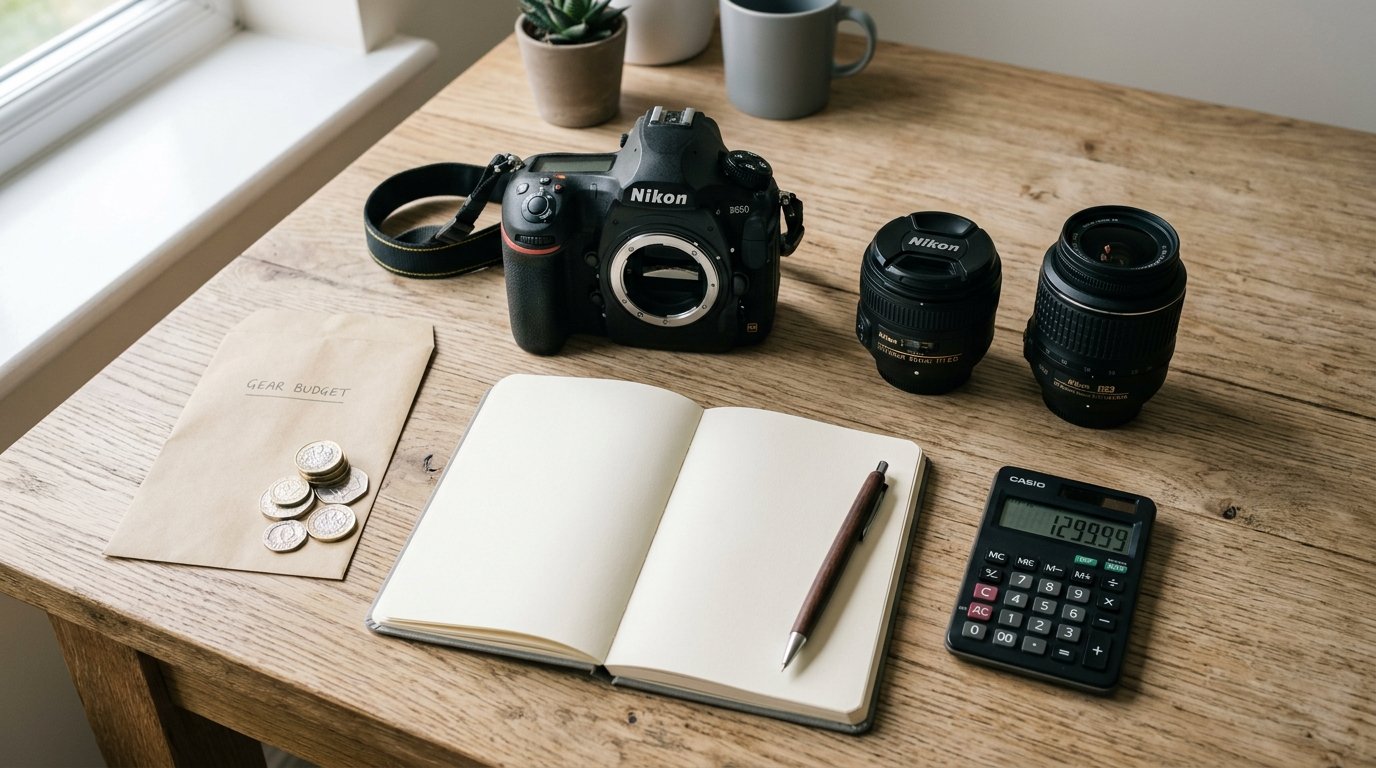
A cheap lens that does not fit your needs is more expensive in the long run than a slightly pricier one you use constantly. Budgeting for a DSLR lens should focus on value, not simply the smallest number.
Start by deciding whether this is a first general-purpose lens, a specialized second lens, or a long-term upgrade. A beginner replacing a basic kit lens may get huge value from an affordable 50mm f/1.8 or a better standard zoom. A wildlife shooter may need to save longer for meaningful telephoto reach rather than buying a short zoom that still falls short.
Used lenses can be excellent value if bought from a reputable dealer with a return policy. Third-party brands can also offer strong performance for less money, especially when brand-name options are expensive.
Try to avoid paying extra for features you will not use often. A constant f/2.8 zoom, pro-level weather sealing, or extreme telephoto range sounds appealing, but only makes sense if it supports your actual shooting. The best budget is the one that buys a lens that solves your most frequent problem well.
A Simple Checklist to Narrow Down Your Dslr Lens Options
If you feel overwhelmed, use this order:
- Define your main subject: portraits, travel, sports, landscapes, or everyday use.
- Confirm mount compatibility and whether your DSLR is APS-C or full frame.
- Choose the focal length range that matches how wide or tight you want your photos.
- Decide whether a prime or zoom suits your style better.
- Set your minimum aperture needs based on low-light use and background blur goals.
- Check autofocus quality, stabilization, weight, and build.
- Compare price against how often you will realistically use the lens.
That sequence keeps emotion out of the purchase. Instead of chasing the most talked-about lens, you choose the one that best matches your camera, subjects, and habits.
FAQ
What Lens Should a Beginner Buy First for a Dslr?
For most beginners, a standard zoom is the safest first lens because it covers everyday situations. If you already have a kit lens and want a better second option, a 50mm f/1.8 is often the most affordable upgrade for portraits and low-light shooting.
Is a Prime Lens Better Than a Zoom Lens for Beginners?
Not always. A zoom is usually easier for general use because it covers multiple focal lengths. A prime is great for learning composition and getting better low-light performance for the money. The better choice depends on whether you value flexibility or simplicity more.
Do I Need Image Stabilization on a Dslr Lens?
You do not always need it, but it is very helpful for handheld shooting, especially with telephoto lenses or in low light. It reduces blur from camera shake, though it will not stop motion blur from a moving subject like a child or athlete.
Can I Use Full-frame Lenses on an Aps-c Dslr?
Usually, yes, if the mount matches your camera system. The lens will give a narrower field of view on APS-C because of the crop factor. Many photographers do this successfully, but the lens may be larger, heavier, and more expensive than necessary.