
The best 3 ways to find inspiration in photography are to study other photographers with a clear question, change how you shoot a familiar place, and build a small photo project around a theme. Instead of waiting to “feel creative,” give your eye something specific to notice. Look at strong images, set simple limits, and turn loose ideas into repeatable practice. These habits work for beginners because they create direction without needing expensive gear, travel, or perfect conditions.
Why Photography Inspiration Is Easier to Find with a System
Photography inspiration often feels random, but it usually comes from three things: input, observation, and limits. Input means looking at useful references, such as photo books, films, strong portfolios, light, color, and real scenes. Observation means slowing down enough to notice what is already around you. Limits mean giving yourself a rule, such as one lens, one color, or one subject.
A system helps because it turns inspiration into a process. You do not need to wait for a dramatic landscape or a new camera. You need a way to see ordinary things with a fresh purpose.
1. Study Other Photographers with a Specific Question
Looking at other photographers is one of the fastest ways to find inspiration, but passive scrolling rarely helps. If you only swipe through images, you may end up comparing your work to theirs instead of learning from it.
Before you look, choose one question:
- How does this photographer use light?
- What makes the subject stand out?
- Where is the camera positioned?
- What colors repeat across the image?
- How much background is included?
Study 10 to 20 images from one photographer, book, magazine feature, or portfolio. Write down three things you notice. Then use one observation in your own way.
For example, if a portrait photographer often places subjects near windows, try making window-light portraits at home. Do not copy the exact image for public work. Copy the lesson instead: soft side light, a simple background, or a calm pose.
2. Change the Way You Shoot a Familiar Place
A familiar place can feel boring because your brain has already labeled it. Your street is “just my street.” Your kitchen is “just the kitchen.” Your local park is “the same park as always.” Inspiration often returns when you give yourself a new way to approach that place.
Try one creative constraint for a short photo walk. A constraint removes too many choices and forces you to notice details you normally ignore.
Beginner-friendly constraints include:
- Shoot only shadows for 20 minutes.
- Use only one focal length or one lens.
- Photograph only the color red.
- Make five photos from a low angle.
- Shoot the same subject at three distances.
- Include reflections in every frame.
The goal is not to create a masterpiece every time. The goal is to interrupt your normal habits. If you usually photograph wide scenes, focus on small details. If you always shoot at eye level, crouch down or shoot from above.
A familiar place becomes inspiring when you stop asking, “Is this location interesting?” and start asking, “What can I notice here that I missed before?”
3. Build a Small Photo Project Around a Theme
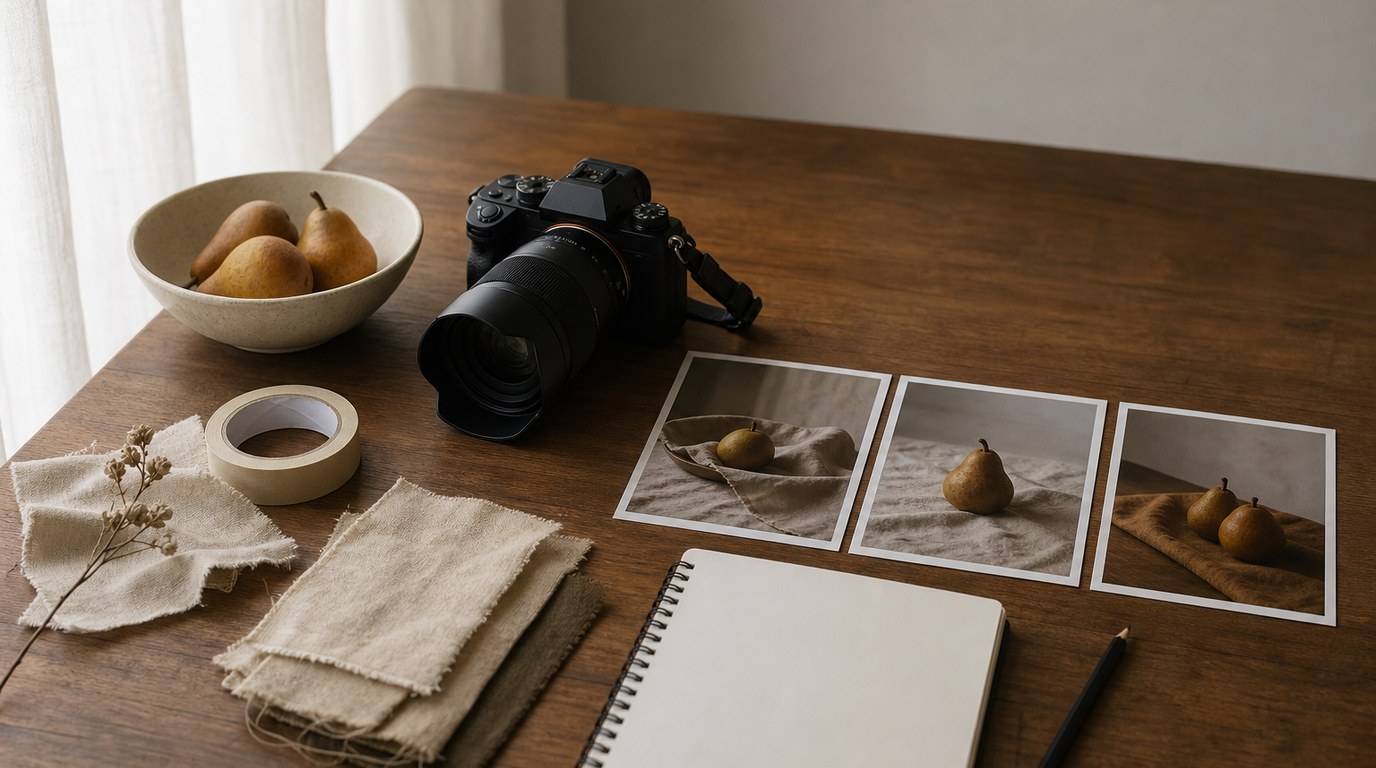
Single photo ideas can help for a day, but a small project gives your inspiration direction. A project does not need to be serious, long, or complicated. It only needs a theme, a limit, and a finish line.
Use this simple structure:
- Theme: What are you exploring?
- Limit: What rule keeps it focused?
- Finish line: When is it complete?
For example, you could photograph “morning light at home” for seven days, “hands at work” for 10 portraits, or “quiet corners of my neighborhood” for one weekend. These projects are small enough to finish but focused enough to keep you looking.
A theme also helps you make decisions. If your project is about rainy days, you know what weather to watch for. If it is about circles, you start seeing wheels, plates, signs, cups, and shadows differently.
When the project is complete, review the images as a set. Pick the strongest five and ask what they have in common. You will learn what subjects, light, and compositions keep pulling your attention.
A Simple Weekly Inspiration Routine for Photographers
Use the three methods together in a weekly routine. On day one, study a photographer or photo style with one question in mind. On day two or three, do a 30-minute shoot in a familiar place using one constraint. Later in the week, choose a small theme and make three to five images for it.
At the end of the week, review your photos. Mark the images that feel strongest and ask why they work. This routine keeps inspiration practical: look, shoot, review, repeat.
Common Mistakes That Make Inspiration Harder to Find
One common mistake is waiting for motivation before picking up the camera. Often, motivation appears after you begin shooting, not before. Another mistake is consuming too much work from others without making your own photos. Research should lead to action.
Beginners also make inspiration harder by choosing projects that are too big. “Create an amazing portfolio” is vague and intimidating. “Photograph five interesting doorways this weekend” is clear and achievable.
Finally, avoid blaming gear too quickly. A new lens can be useful, but a stronger question usually creates better ideas.
FAQ
How Do I Find Photography Inspiration When I Feel Stuck?
Start with a small action, not a big idea. Study five photos you like and write down one thing they have in common. Then shoot for 20 minutes using that idea, such as shadows, reflections, color, or close-up details.
Is It Okay to Copy Another Photographer for Practice?
Yes, it is okay to imitate a technique privately for learning, such as lighting, composition, or posing. Do not present a close copy as your original idea. Study the lesson behind the photo, then apply it to your own subject.
What Should Beginners Photograph for Inspiration?
Beginners should photograph subjects that are easy to access: home details, pets, family, local streets, food, plants, windows, shadows, and daily routines. The subject matters less than the exercise. Choose something nearby and practice seeing it in a new way.
Can Camera Settings Help with Creative Inspiration?
Yes. Settings can create useful limits. Try a wide aperture for soft backgrounds, a slow shutter speed for motion blur, or black and white mode to focus on light and shape. Use settings as creative prompts, not just technical adjustments.