
You recognize a good photo opportunity by noticing when a subject, light, moment, and composition begin to work together. A scene does not need to be dramatic or rare. It only needs one strong visual reason to become a photograph: beautiful light on an ordinary street, a clear expression on a person’s face, a bold shape against a plain background, or a small moment that will disappear in seconds.
The key is to pause before shooting and ask, “What is interesting here?” If you can name the main subject, see how the light supports it, and find a clean way to frame it, you likely have a strong opportunity. Good photographers do not just find photos; they notice potential, then improve it with timing, position, and composition.
Start with This Mental Model: Subject, Light, Moment, Composition
A good photo opportunity usually has at least one of four ingredients: a clear subject, interesting light, a meaningful moment, or a strong composition. The more of these you can combine, the better the image usually becomes.
Think of them as a quick mental checklist. The subject tells the viewer what to look at. The light creates mood, shape, and depth. The moment adds life, emotion, or timing. Composition organizes everything inside the frame.
For example, a cyclist passing a bright wall may not be interesting until the late-afternoon light creates a long shadow. Then the subject, light, moment, and composition start working together. You do not need all four every time, but you should know which one is making the scene worth photographing.
Notice What First Catches Your Eye
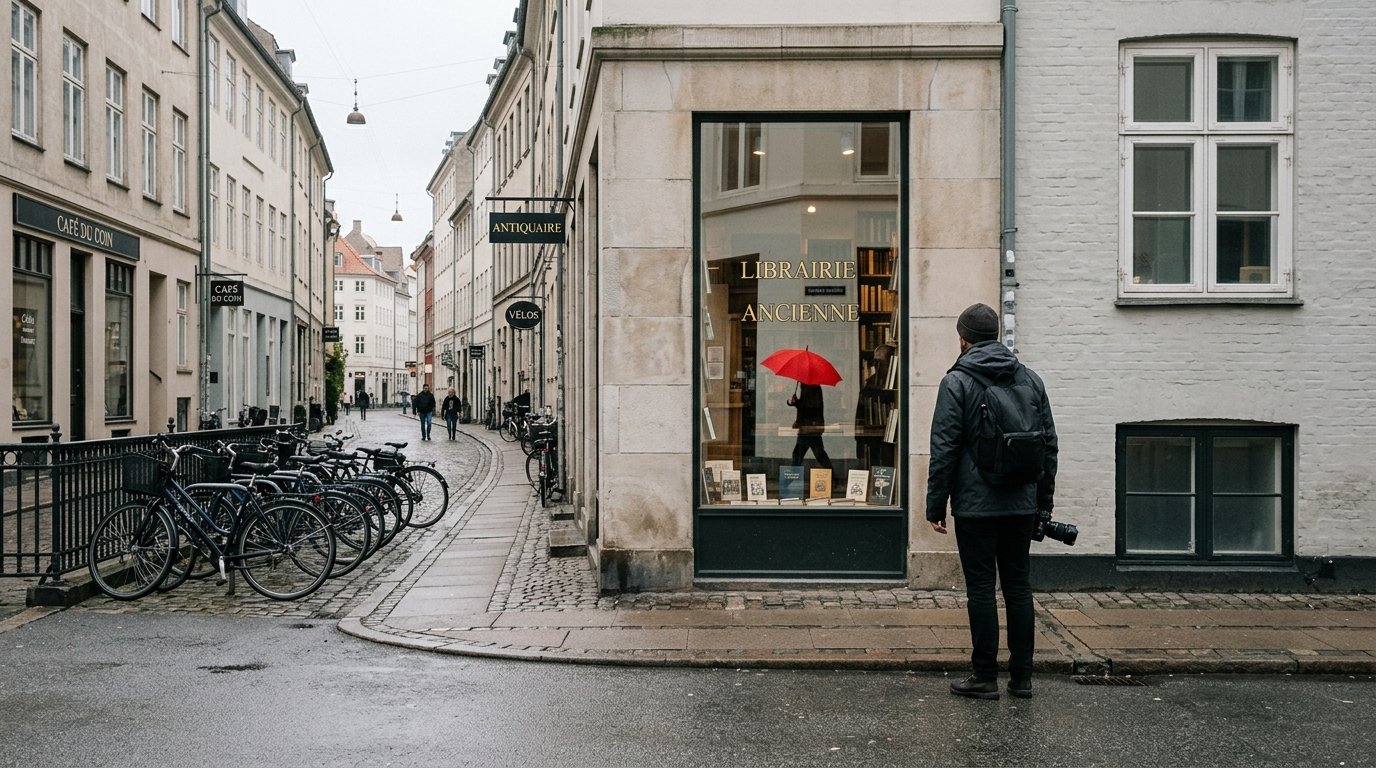
Before you raise the camera, identify what made you stop. Was it a color, face, gesture, reflection, pattern, shadow, or contrast? That first visual trigger is often the reason the photo exists.
Beginners often make the mistake of photographing the whole scene instead of the thing that caught their attention. If a red umbrella in a gray street attracted you, the photo should probably be about the red umbrella, not the entire street. If a child’s expression caught your eye, frame for the expression, not the whole playground.
A simple habit helps: silently name the attraction. Say, “It’s the shadow,” “It’s the curve,” or “It’s the eye contact.” Once you name it, you can compose around it.
Look for Light That Adds Mood or Shape
Light can turn an ordinary subject into a strong photo opportunity. Soft window light can make a portrait feel calm. Low golden-hour light can add warmth and long shadows. Harsh midday light can create bold contrast, graphic shapes, and dramatic silhouettes.
Instead of only asking whether there is “enough light,” ask what the light is doing. Is it revealing texture on a wall? Separating the subject from the background? Creating a bright spot that leads the eye? Adding mystery by hiding part of the scene?
For example, a simple coffee cup on a table may look flat under ceiling lights. Move it near a window, and the side light gives it shape, shadow, and atmosphere. When you notice light that creates mood or structure, you are often looking at a photo opportunity.
Find a Clear Subject Before You Compose
A good scene is not always a good photograph. The difference is often subject clarity. Your viewer should quickly understand what the photo is about, even if the image has supporting details.
Look for a visual anchor: a person, object, shape, building, animal, or detail that can hold attention. If everything in the scene feels equally important, the photo may become confusing. In that case, move closer, change your angle, or wait for one element to stand out.
For example, a busy market may feel exciting in person but chaotic in a photo. A vendor’s hands arranging fruit, a customer laughing, or a single bright basket can become the subject that makes the scene work.
Recognize Moments, Gestures, and Change
Some opportunities are not about objects; they are about timing. A good moment might be a smile, glance, jump, wave, splash, passing cloud, moving shadow, or person entering the perfect spot in the frame.
To recognize these, watch for change. If something is about to happen, get ready before it peaks. A child running toward a puddle, a bird turning its head, or a pedestrian nearing a beam of light may all become stronger in the next second.
This is where patience matters. Sometimes the background, light, and composition are already good, but the scene needs a human gesture or moving subject to complete it. Use burst mode when action is unpredictable, but still try to anticipate the decisive instant.
Use Composition to Test Whether the Scene Will Work
Once something catches your eye, composition helps you test whether it can become a strong image. Move your feet before changing settings. Step left or right to remove distractions. Get lower to make a subject feel larger. Move closer if the important detail is too small.
Ask whether the frame has order. Are there leading lines, symmetry, layers, repetition, contrast, or negative space? Is the background helping or competing? Can you simplify the scene by changing angle?
For example, a person standing in front of a mural might look messy if the mural cuts through their head. A small step to the side may place them against a clean patch of color. The opportunity was there, but the photograph only worked after the composition was built.
Quick Signs of a Good Photo Opportunity
When you are in the field, you need fast signals. Use this table as a simple reference, not a rigid rulebook. If you notice one strong sign, explore it. If you notice several at once, act quickly.
| Sign | What It Means | Quick Action |
|---|---|---|
| Your eye keeps returning to one thing | There may be a clear subject | Frame around that element |
| Light creates shadows, glow, or contrast | The scene has mood or shape | Expose for the important highlight |
| Something is about to happen | Timing may make the photo | Get ready and wait |
| The background is clean | The subject can stand out | Simplify the frame |
| Colors or shapes repeat | There is visual structure | Align the pattern carefully |
| One element breaks the pattern | There is contrast and interest | Make the difference obvious |
| The scene feels emotional | The photo may connect with viewers | Focus on expression or gesture |
Ask These Questions Before You Press the Shutter
A quick question can save a weak photo or sharpen a strong one. Before pressing the shutter, ask: What is my subject? What is the light doing? What moment am I waiting for? What can I remove from the frame?
Then check the edges. Many distractions hide near the borders: bright signs, cut-off limbs, trash cans, or random people. A small adjustment can make the image cleaner.
Also ask whether you should shoot now or wait. Sometimes taking a safety shot is smart, especially with fast-changing light or action. After that, improve the frame. Move closer, wait for a better gesture, or adjust your position. A good opportunity often rewards both quick reaction and one extra second of thought.
Common Mistakes That Make You Miss Good Photo Opportunities
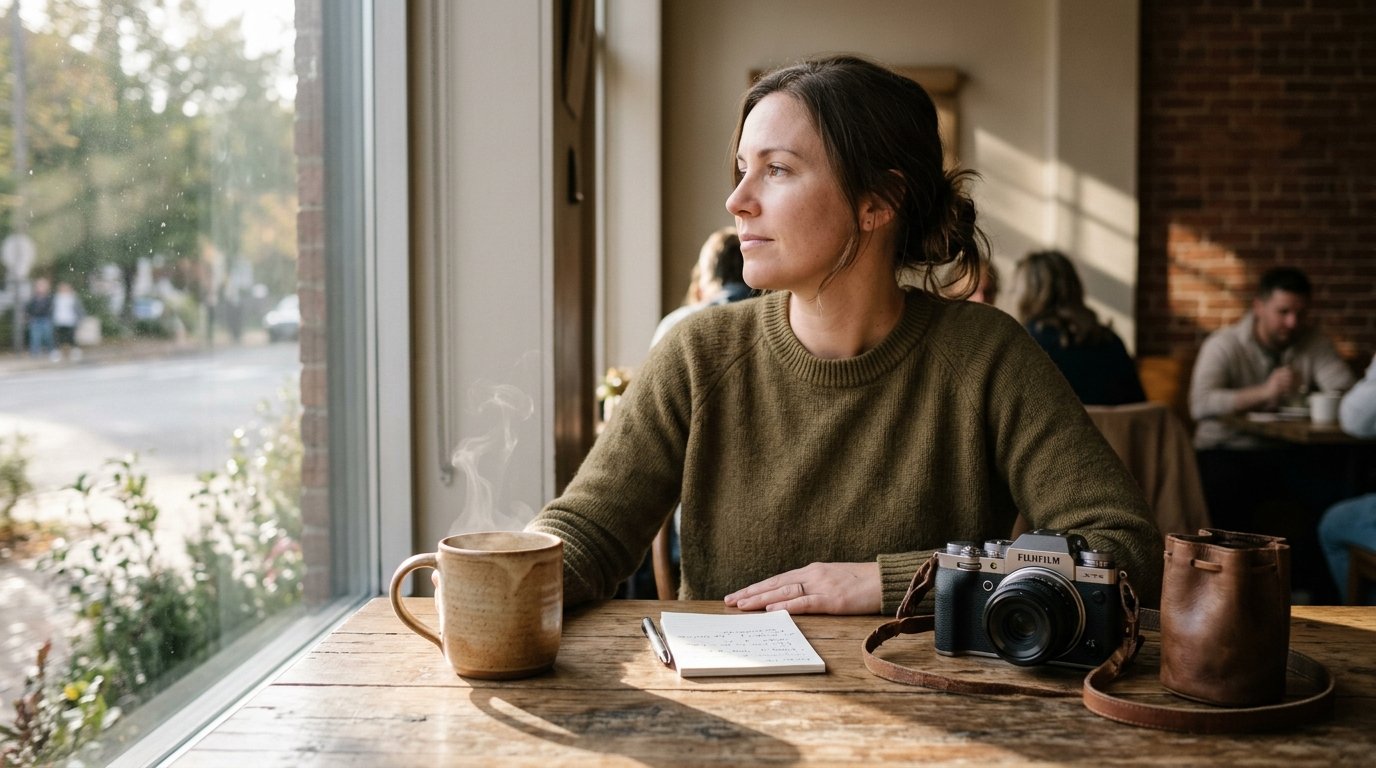
The biggest mistake is walking around on autopilot. If you are only looking for “beautiful things,” you may miss small but meaningful scenes: steam rising from a cup, a hand on a railing, or light crossing a wall.
Another mistake is shooting too soon and leaving too quickly. The first frame is often only a sketch. Stay a little longer and watch how the scene changes.
Beginners also miss opportunities by overthinking gear. Camera settings matter, but recognition comes first. A perfectly exposed photo of a weak subject is still weak. Finally, avoid cluttered framing. If the viewer cannot tell what mattered to you, the opportunity was not fully developed.
Practice Exercises to Train Your Eye
You can train recognition with simple exercises. First, try a “one block, ten photos” walk. Stay on one street or in one park and find ten different subjects. This forces you to notice instead of chase novelty.
Second, choose one theme for a day: shadows, reflections, hands, red objects, or leading lines. Limiting your attention makes visual patterns easier to see.
Third, review your photos and ask why each one worked or failed. Was the subject unclear? Was the light flat? Did you miss the best moment? This review builds instinct. Over time, you start recognizing opportunities faster because you have studied your own results.
Final Takeaway: Good Photo Opportunities Are Noticed, Then Built
A good photo opportunity begins when something catches your eye, but it becomes a better photograph through decisions. Identify the subject, study the light, wait for the moment, and compose with intention.
You do not need exotic locations or expensive gear to notice stronger photos. You need attention, curiosity, and the habit of asking what makes a scene visually worth keeping.
FAQ
What Should a Beginner Know First About How Do You Recognize a Good Photo Opportunity?
Start by looking for one clear reason to take the photo. It might be the subject, light, moment, color, shape, or emotion. If you can name what caught your eye, you can make better choices about framing, timing, and what to leave out.
What Matters Most When Evaluating How Do You Recognize a Good Photo Opportunity?
Subject clarity matters most. Even beautiful light or an exciting location can produce a weak image if the viewer does not know where to look. After identifying the subject, check whether the light, background, and timing help that subject stand out.
What Mistakes Should Readers Avoid with How Do You Recognize a Good Photo Opportunity?
Avoid photographing everything at once. Beginners often include too much because the scene felt interesting in person. Instead, simplify. Remove distractions, move closer, wait for a stronger moment, and make sure the photo clearly shows what interested you.
What Is the Next Logical Step After Learning About How Do You Recognize a Good Photo Opportunity?
Practice noticing on purpose. Take short photo walks with one goal, such as finding shadows, gestures, or clean backgrounds. Then review your images and identify what worked. This turns recognition from a lucky feeling into a repeatable photography skill.