
Before you press the shutter, pause for a few seconds and ask five simple questions: What is my subject? What can I remove? Where should the viewer look first? What is the light doing? What feeling or story do I want? These questions turn photography from “point and hope” into a series of clear choices.
You do not need advanced settings or expensive gear. Whether you shoot with a phone, mirrorless camera, or DSLR, this checklist helps you build stronger composition, cleaner frames, and photos with more purpose.
| Question | What It Helps You Fix |
|---|---|
| What is my subject? | Unclear or weak main focus |
| What can I remove? | Busy backgrounds and distractions |
| Where should the viewer look first? | Poor visual flow |
| What is the light doing? | Flat, harsh, or confusing light |
| What feeling or story do I want? | Photos that look technically fine but empty |
Why These Questions Work Better Than Random Shooting
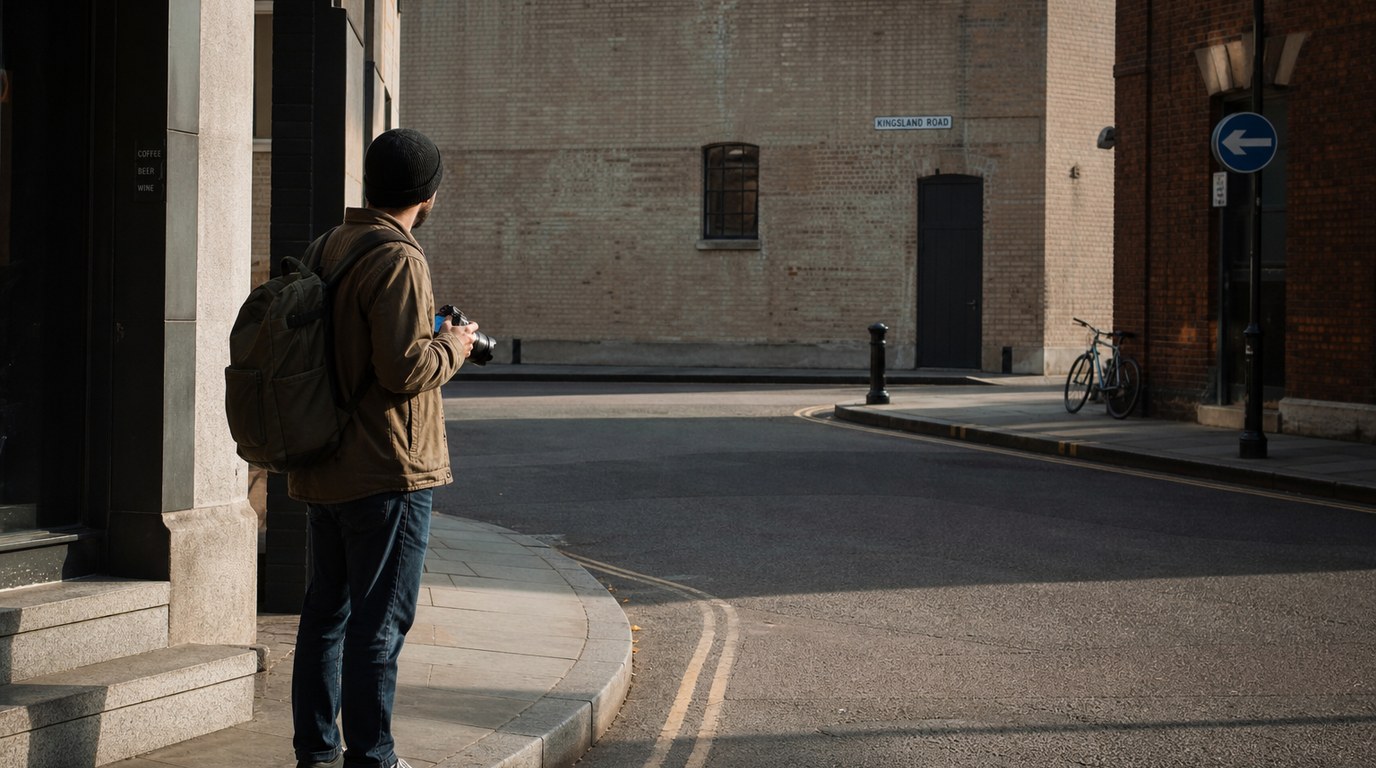
Many beginner photos fail for a simple reason: the photographer reacts faster than they think. Something looks interesting, the camera comes up, and the photo is taken before the frame is organized.
The five-question method creates a short pause. That pause is where composition improves. You notice the background, adjust your angle, wait for better light, or decide what the photo is really about.
Strong photos are rarely just lucky. They are intentional. Even quick street, travel, family, or nature photos benefit from one or two thoughtful choices before the shutter click.
1. What Is My Subject?
Your subject is the main thing the viewer should notice. It might be a person, building, flower, dog, coffee cup, shadow, color, or gesture. If you cannot name the subject in a few words, the viewer probably will not know where to look either.
Before shooting, ask: “What is this photo actually about?” Then compose around that answer.
For example, if you are photographing a friend at a market, the subject may be your friend’s expression, not the entire market. Move closer, use a cleaner background, or wait until fewer people pass behind them.
A clear subject does not always need to be centered or large, but it does need to feel important. Use focus, size, placement, contrast, or light to make it stand out.
2. What Can I Remove from the Frame?
Good composition is often subtraction. Instead of asking what else you can include, ask what you can remove. Distractions compete with your subject and weaken the photo.
Look at the edges of the frame first. Are there cut-off signs, bright trash cans, random hands, parked cars, or awkward tree branches? Then check behind your subject. A pole growing out of someone’s head is easy to miss in the moment but obvious later.
You can remove distractions by moving your feet, changing height, zooming in, waiting, or shifting your subject slightly. You do not need a perfect background; you just need fewer elements fighting for attention.
For example, if you are photographing a flower, a small step to the left may replace a messy sidewalk with a dark green bush, instantly making the flower more visible.
3. Where Should the Viewer Look First?
Once you know your subject and remove distractions, decide how the viewer’s eye should move through the image. A strong photo gives the viewer a visual path instead of leaving them to wander randomly.
Use simple composition tools. Place the subject on a clean part of the frame. Use leading lines, such as roads, fences, shadows, or railings, to point toward it. Use brightness and contrast because the eye often goes to the brightest or sharpest area first.
You can also use framing. A doorway, window, tree branch, or gap between people can naturally surround your subject and make it feel more important.
For example, if you photograph a cyclist on a path, position the path so it leads toward them. The viewer’s eye will enter the frame, follow the line, and land on the subject.
4. What Is the Light Doing?
Light changes the entire feel of a photo. Before taking the picture, notice three things: direction, quality, and mood.
Direction means where the light comes from. Front light shows detail clearly. Side light creates shape and texture. Backlight can make silhouettes, glowing edges, or dramatic atmosphere.
Quality means whether the light is hard or soft. Hard midday sun creates strong shadows and high contrast. Soft window light, shade, or cloudy light is usually easier for portraits and gentle scenes.
Mood is the emotional effect. Warm sunset light can feel calm or nostalgic. Cool blue light can feel quiet or lonely. Harsh light can feel energetic, tense, or graphic.
If the light is not helping, change something. Turn your subject, move into shade, wait for a cloud, or shoot from another side. Better light often improves a photo more than a better camera.
5. What Feeling or Story Do I Want This Photo to Have?
This question gives your photo intention beyond “this looked nice.” Ask what you want the viewer to feel or understand. Peaceful? Busy? Mysterious? Joyful? Small in a huge landscape? Connected to a person?
Your answer affects your choices. A peaceful photo may need extra space, soft light, and simple colors. A busy city photo may work better with layers, movement, and contrast. A lonely photo might place a small subject in a large empty area.
For example, photographing a child running through a park could become several different images. A close, low angle might feel energetic. A wide shot with the child small under tall trees might feel adventurous. A backlit shot at sunset might feel nostalgic.
The story does not have to be complicated. It just needs to guide your decision.
How to Use the 5 Questions in Real Time
You do not need to recite all five questions slowly before every shot. Use them as a quick scan:
- Name the subject.
- Clean the edges and background.
- Decide where the eye should go first.
- Check the light direction and quality.
- Choose the feeling.
With practice, this becomes automatic. At first, spend 10 seconds. Later, you may only need two. For fast moments, use just the most urgent question: “What is my subject?” or “What can I remove?”
Common Mistakes When Using This Checklist

The biggest mistake is overthinking until the moment disappears. These questions should help you see faster, not make photography feel stiff.
Another mistake is trying to make every photo perfect. Some images are casual memories, and that is fine. Use the checklist when you want a stronger result.
Also avoid applying every rule the same way. A busy frame can work if the story is busyness. Centered subjects can work if the composition feels balanced. The goal is better decision-making, not rule-following.
FAQ
What Should a Beginner Know First About 5 Simple Questions That Will Change Your Photo?
Start with the subject. If the main subject is unclear, the rest of the composition becomes harder. Before worrying about rules, settings, or editing, ask what the photo is about and make that thing easy to notice.
What Matters Most When Evaluating 5 Simple Questions That Will Change Your Photo?
What matters most is whether each question leads to a visible improvement in the frame. The checklist should help you simplify the scene, guide attention, use better light, and create a photo with clearer purpose.
What Mistakes Should Readers Avoid with 5 Simple Questions That Will Change Your Photo?
Avoid turning the checklist into a slow, rigid process. You do not need a perfect answer every time. Also avoid using it only after the photo is taken. The real value comes from noticing problems before you press the shutter.
What Is the Next Logical Step After Learning About 5 Simple Questions That Will Change Your Photo?
Practice with one question at a time. Spend a day identifying stronger subjects, another removing distractions, and another watching light. Once each habit feels natural, combine them into a quick pre-shot routine for better everyday photos.