
The easiest way to improve your photos this weekend is to practice one small skill at a time: find better light, choose a clear subject, simplify the frame, focus carefully, and make a light edit afterward. You do not need new gear or a complicated plan. A phone, compact camera, mirrorless camera, or DSLR can all work. The goal is to slow down just enough to make more intentional choices before you press the shutter, then review what worked so your next photos are stronger.
Introduction: a Weekend Is Enough to Build Better Habits
You can make real progress in photography over one weekend if you treat it like practice, not pressure. Instead of trying to master every camera setting at once, choose a few focused exercises. Walk during better light, photograph simple subjects, check your backgrounds, and review your results. These small habits quickly make photos look cleaner, sharper, and more deliberate.
The Simple Mental Model: Light, Subject, Frame, Focus, Finish
When a photo feels weak, it usually has a problem in one of five areas: light, subject, frame, focus, or finish. Light affects mood and detail. The subject gives the photo a reason to exist. The frame decides what stays in and what gets removed. Focus controls sharpness and attention. Finish means your final crop and edit. Use this simple checklist before and after shooting.
Weekend Photography Improvement Plan
Use this table to choose exercises based on how much time you have and what you want to improve first.
| Exercise | Time Needed | Good Location | Skill Improved |
|---|---|---|---|
| — | —: | — | — |
| Golden hour walk | 30–60 minutes | Street, park, yard | Light |
| One subject 10 ways | 20–30 minutes | Anywhere | Composition |
| Background cleanup | 15–30 minutes | Home or outdoors | Framing |
| Focus practice | 20–40 minutes | Home, park | Sharpness |
| Mini photo story | 45–90 minutes | Market, walk, event | Storytelling |
| Edit pass | 20–45 minutes | Computer or phone | Finishing |
1. Take a Golden Hour Photo Walk
Golden hour is the time shortly after sunrise or before sunset when sunlight is lower, warmer, and softer. It makes many beginner photos look better immediately because shadows are gentler and colors feel richer. Take a short walk and photograph the same types of subjects you normally shoot: people, buildings, pets, plants, or street scenes. Notice how side light adds shape and backlight creates glow. Avoid shooting directly into harsh midday sun for this exercise.
2. Photograph One Subject 10 Different Ways
Pick one simple subject, such as a coffee cup, bicycle, flower, chair, or doorway. Your job is to make 10 different photos of it without changing the subject. Shoot from above, low to the ground, close up, far away, from the side, through another object, and with different backgrounds. This limitation forces you to stop taking the first obvious photo. You will start seeing angles, shapes, and details you normally miss.
3. Clean up the Background Before You Press the Shutter
A messy background can ruin an otherwise good photo. Before taking the shot, scan the edges and the area behind your subject. Look for trash cans, bright signs, tree branches through heads, cluttered shelves, or random people half in the frame. Then move your feet, lower the camera, change your angle, or ask the subject to step sideways. This is one of the fastest ways to make photos look more intentional.
4. Use the Rule of Thirds, Then Break It on Purpose
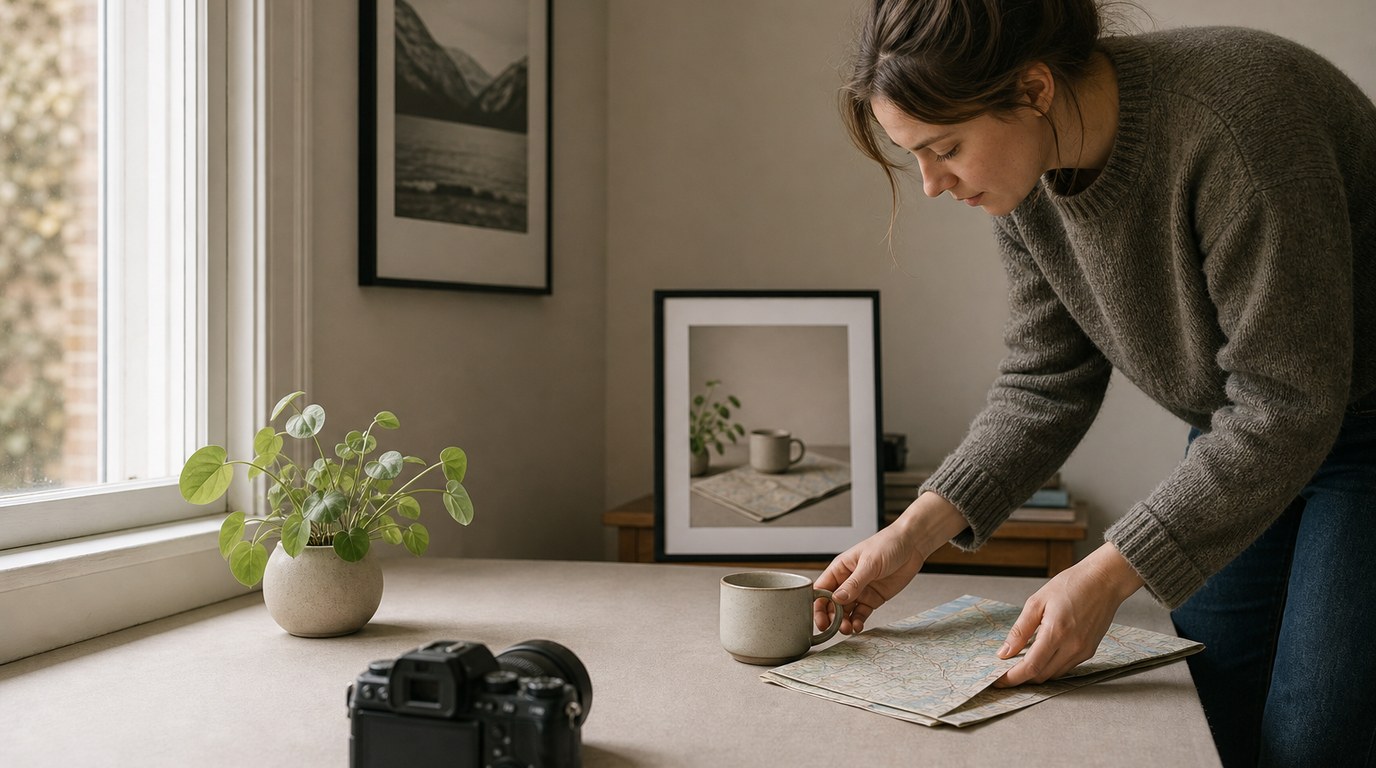
Turn on the grid in your camera or phone app. Place your subject along one of the vertical lines or near an intersection point instead of always putting it in the center. This often creates a more balanced composition, especially for portraits, landscapes, and travel photos. After a few shots, break the rule deliberately. Try a centered composition with strong symmetry. The point is not to obey a rule, but to notice placement.
5. Practice Focus on a Still Subject and a Moving Subject
Sharpness improves when you choose your focus point instead of letting the camera guess. Start with a still object and place the focus point exactly where detail matters, such as an eye, label, or flower center. Then try a moving subject, like a walking person, pet, or cyclist. Use continuous autofocus if your camera has it. With a phone, tap the subject and take several shots. Compare which frames are actually sharp.
6. Shoot the Same Scene at Three Exposure Levels
Find a scene with both light and shadow. Take one photo at normal brightness, one slightly darker, and one slightly brighter. On a phone, tap the screen and drag the exposure slider if available. On a camera, use exposure compensation, often marked with a plus/minus symbol. Review the results. Darker can protect bright skies and create mood. Brighter can reveal faces and shadow detail. This teaches you that “correct” exposure depends on your goal.
7. Change Your Distance Instead of Only Zooming
Zooming changes framing, but moving your body changes perspective. Photograph a person, object, or building from far away, then step closer and shoot again. Notice how the subject becomes more present and how the background changes. Then try backing up and zooming in if your camera allows it. The background may appear larger and more compressed. This exercise teaches you to use your feet, not just the zoom control, to shape the photo.
8. Make a Mini Photo Story in Five Images
Instead of capturing one random snapshot, tell a small story in five photos. Choose a simple activity: making breakfast, walking the dog, visiting a market, cleaning a bike, or going for coffee. Shoot an establishing photo, a medium photo, a close-up detail, a human moment, and a final image. This builds coverage and intention. You will begin thinking like a visual storyteller rather than someone collecting disconnected images.
9. Review Your Photos and Pick Only Your Best Five
Improvement happens during review, not just while shooting. After a session, choose only your best five photos. Ask why each one works. Is the light better? Is the background cleaner? Is the subject clearer? Then look at the rejected photos and find one repeated problem. Maybe you shot too quickly, missed focus, or included clutter. This simple review turns every weekend practice session into feedback for the next one.
10. Do a Simple Edit Pass Without Overprocessing
Editing should polish the photo, not rescue every mistake. Choose your best images and make a simple pass: crop distractions, straighten tilted lines, adjust brightness, recover highlights if needed, lift shadows gently, and add a small amount of contrast. Keep colors believable unless you are making a stylized image on purpose. Avoid pushing clarity, saturation, or filters too far. A clean edit makes the photo feel finished while still looking natural.
A Simple Two-day Practice Schedule
On Saturday, focus on shooting. Take a golden hour walk, practice background cleanup, and photograph one subject 10 ways. If you have extra time, add the three-exposure exercise. On Sunday, practice focus, make a five-image story, and review your photos. Finish by editing only your best five. This schedule keeps the weekend manageable and gives you a full cycle: shoot, select, learn, and polish.
Common Beginner Mistakes to Watch for
The most common mistake is rushing. Beginners often press the shutter before checking light, background, focus, and edges. Another mistake is taking too many similar photos without reviewing them. Watch for crooked horizons, clutter behind the subject, missed focus on eyes, and overedited colors. Also avoid changing every setting at once. If you are practicing light, focus on light. If you are practicing focus, make sharpness the priority.
Conclusion: Pick One Skill, Practice It, Then Review
You do not need to transform your photography in one weekend. You only need to build better habits. Choose one or two exercises, repeat them with attention, and review your results honestly. Better photos usually come from clearer decisions: better light, stronger subjects, simpler frames, sharper focus, and cleaner edits. Practice those steps often, and your images will improve without needing new equipment.
FAQ
Can I Do These Photography Exercises with a Phone?
Yes. A phone is excellent for these weekend exercises because it is quick, familiar, and always with you. Focus on light, composition, background cleanup, distance, and editing. If your phone has exposure adjustment, portrait mode, or grid lines, use them, but do not depend on them.
What Is the Fastest Way to Improve My Photos This Weekend?
The fastest improvement usually comes from better light and cleaner backgrounds. Shoot during golden hour and spend a few seconds removing distractions before every photo. Those two habits make images look more polished immediately, even if you do not change camera settings.
Do I Need to Use Manual Mode to Improve My Photography?
No. Manual mode can be useful, but it is not required for better photos. Beginners often improve faster by learning light, composition, focus, and exposure compensation first. Use auto, aperture priority, or your phone camera if that helps you concentrate on the image.
How Many Photos Should I Take During a Practice Session?
Take enough photos to experiment, but not so many that you stop thinking. For a short exercise, 30 to 80 photos is plenty. The important step is reviewing them afterward and choosing the best few, not filling a memory card with near-duplicates.
How Often Should I Repeat These Weekend Exercises?
Repeat one or two exercises every weekend for a month. You will notice patterns quickly: what light you like, where you miss focus, and how backgrounds affect your photos. Repetition makes the process automatic, which is when your photography starts improving naturally.