
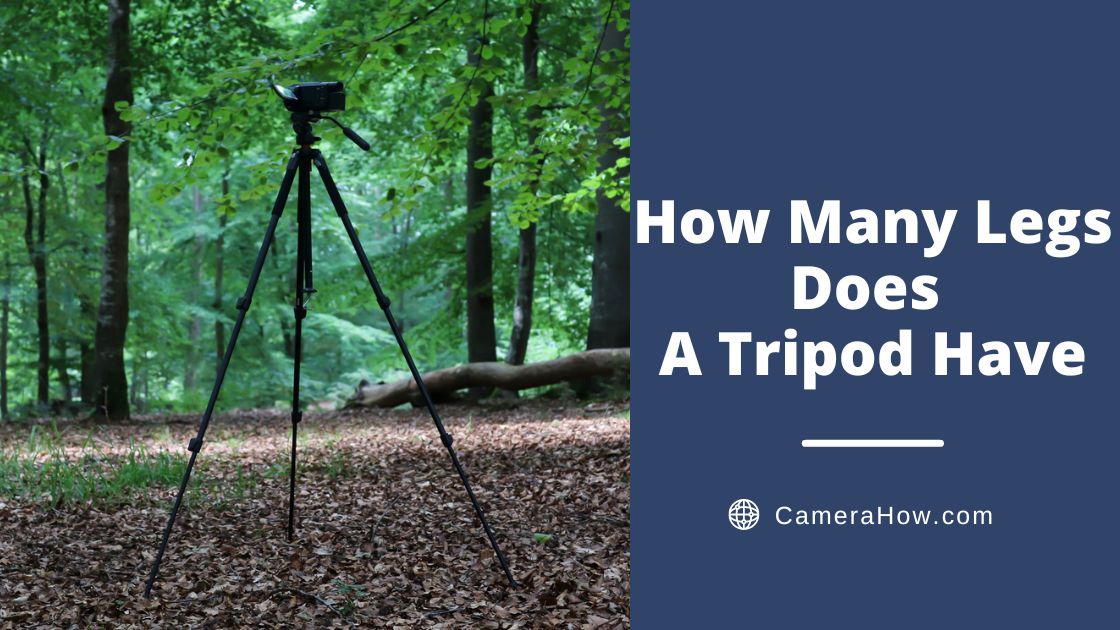
In photography, a tripod is one piece of the puzzle of taking buttery smooth, crisp footage. But how many legs does a tripod have? Surprisingly, most people don’t know the correct answer to this question because there are so many tripod brands with different designs and structures.
This guide looks at what a tripod is, how many legs it has, and the different types available.
Let’s get started!
What Is a Tripod?
A tripod is an all-purpose support for holding a camera or other shooting accessory. It’s valuable for producing clean, stable pictures when shooting in low light or using a long lens.
You can level an uneven surface using a tripod’s extended legs and twist locks.
Although they always have three support legs, each model will have a different number of parts and lengths for each leg. This alters the tripod’s vertical distance as well as its folded-for-travel size.
Structural Design of a Tripod
The structure of a tripod consists of different parts that work together to provide maximum stability. Here is a detailed explanation of each part.
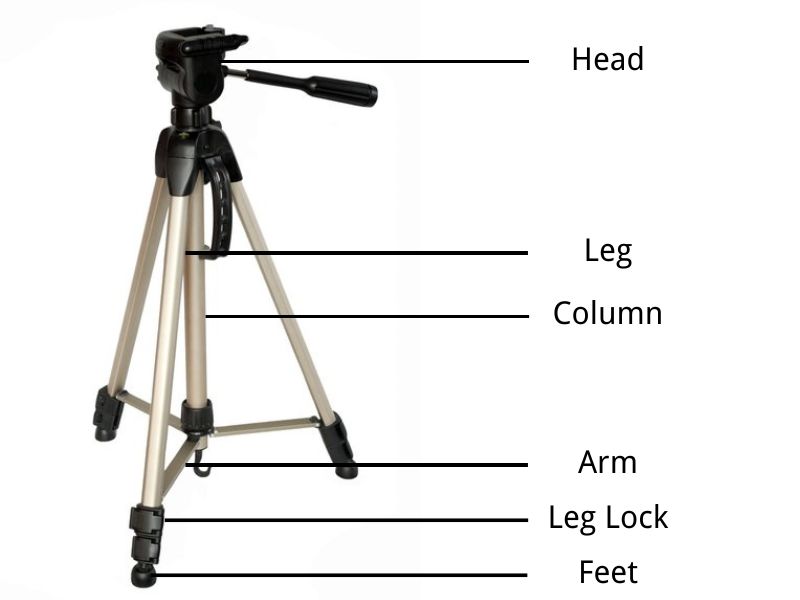
- Head: This component supports your camera above the central column. You can tilt it in various ways to get the correct angle for your shooting needs.
- Column: This is the tripod’s central column, which may be raised or lowered as needed.
- Arms: Typically, lateral arms link the legs of large, sturdy tripods. The arms also provide more stability.
- Legs: The legs serve as the tripod’s structural support. The legs are frequently separated into parts that slide into or over one another. I love that tripods have three extendable or retractable legs that you can set to compensate for any uneven shooting ground.
- Leg locks: The tripod can be held in place using one of two; twist or lever leg locks. The latter is less complicated. However, they are not as resistant to harsh weather as twist locks.
- Feet: The feet basically cover the base of the tripod legs. The sort of tripod feet you wish to attach is your choice. Depending on your surroundings, you can use rubber or spiked feet for your tripod.
Why Use a Tripod?
While some tripods may be unwieldy, here are some reasons to use them when shooting:
- Improved stability even when shooting with a lot of movement, like running or skating.
- Excellent shots, even in low light conditions.
- You can capture long exposures.
- You get crisp, sharper images.
- You can easily frame and find quality shots.
How Many Legs Does a Tripod Have?
A tripod has three legs because it requires two to be stable and stand upright. The third leg contributes to stability by preventing the camera from swinging back and forth when shooting at an angle or on uneven terrain.
I found that there’s also a QuadroPod, a four-legged tripod that boasts more excellent stability than a typical three-legged tripod. This tripod with four legs is unusual and not frequently used, nevertheless.
Why Do Tripods Have Three Legs?
Tripods have three legs for more stability.
If you’re weighing stability against portability, this tripod vs. monopod comparison can help.
The legs of a three-legged tripod with good design are sturdy and slightly inclined outward. Because of this, it sets each of the legs equally apart from the other two legs and forms a perfect balance triangle.
Types of Tripods
There are different types of tripods depending on the number of legs and what it’s designed for.
Standard Tripod
This is a typical three-legged support system for holding a camera steady. The tripod enables you to capture clear images or recordings without the camera shaking or moving.
Standard tripods often feature telescoping legs that may be adjusted in length and are constructed of metal or sturdy plastic.
With this tripod, you can also easily spin and tilt the head, which makes positioning the camera simple.
I love that most common tripods also have a carrying case, making them easier to transport and travel with.
Pocket Tripod
A pocket tripod is one of the most portable kinds of tripod you can find. You can carry them everywhere as long as your pockets are large enough!
The sole drawback of a pocket tripod is that it can only support tiny cameras because it can’t support much weight.
Heavy Duty Tripod
In sharp contrast to pocket tripods, heavy-duty tripods are designed for heavy work.
Because they were made using pricey materials, they are much rarer and more expensive. They are more frequently found in studios and are the skilled type photographers typically choose.
They are entirely steady since they are highly specialized. Once they’re in place, some are immovable and can naturally support enormous, heavy cameras.
Tripod Vs. Monopod
The key difference is that a tripod has three legs while a monopod has one leg.
Tripods and monopods serve the same function, although they have distinct advantages and characteristics. Both tripods and monopods will relieve your neck of the burden of the camera sling. Additionally, they’ll give some camera shaking protection.
While monopods are more portable, tripods are more steady.
In my opinion, the most firm and stable camera support is a tripod; however, they may sometimes be large and sluggish to maneuver around with.
Although less sturdy than a tripod, a monopod gives you far more freedom of movement. It’s your best bet if you’re doing mobile shoots and are always on the go. It’s easy to hold the monopod in your hand and move around. Additionally, it provides mild camera shake prevention and supports the weight of large lenses.
If you’re recording a video or photo with extended exposure times, you might want to go with the steadiness of a tripod. A tripod’s steadiness more than makes up for its lack of mobility. And you can comfortably use your largest, heaviest lenses to capture crisp long exposures.
For macro photography and extended exposure, tripods are also perfect. But when photographing sports in motion, monopods are excellent for stabilizing your long lenses.
If both stability and movement are a priority in your shoots, I recommend you go for convertible tripods that you can turn into a monopod. This is also good because you gain both benefits without spending money on each device separately.
How to Buy the Right Tripod?
Here are three tips to help you choose the right tripod for your next photography project.
- Photography style: Because different types of tripods are designed for different shooting styles, I recommend buying what fits your style. If you’re a landscape photographer, go for a tripod holding your large camera equipment. And if you travel a lot, buying a light and portable tripod is best.
- Supported weight: Before buying a tripod, ensure it’s sturdy enough to support the weight of your shooting gear. If you’re buying from a physical store, test it out to see how supportive it is.
- Budget: Tripods from different brands are priced differently. Some go for as low as $100 and high as $1000. When buying a tripod, choose the best one that sits right with your budget.
Tips for Using Tripods The Right Way
Here are great tips to help you use your tripod correctly:
- Use a tripod certified for a load of your camera and equipment.
- Before mounting your camera, ensure the tripod is steady and leveled enough.
- Use a tripod while taking pictures at night or in low light to boost camera steadiness and prevent fuzzy images.
- Attach your camera to the tripod head using a tripod strap to prevent unintentional drops.
- When shooting pictures, use a remote shutter control to reduce vibration.
- Use a tripod under the right weather conditions to avoid deterioration by harsh weather, especially when shooting outdoors.
Bottom Line
Although most tripods have three legs, certain types come with a variable number. One of the most important things to consider when selecting a tripod is the number of legs since it will impact its stability and portability. Also, consider how much equipment weight you intend to support with the tripod you buy. I recommend three-legged tripods because they offer a nice blend of stability and agility.