
The most important things new photographers should know are not about owning the newest camera. Photography starts with seeing light, choosing a clear subject, arranging the frame, and using camera settings to support the photo you want to make. Gear matters, but it matters less than understanding what your camera is doing and why a photo looks the way it does.
As a beginner, you do not need to master everything at once. Learn how aperture, shutter speed, and ISO affect exposure. Practice focusing accurately. Notice whether the light is soft, harsh, front-lit, or backlit. Use simple composition choices to guide the viewer’s eye. Shoot often, review your mistakes, and make small improvements each time.
Good photography is built through repetition. If you understand the basics and practice with intention, your photos will improve much faster than if you only chase better equipment.
Start with the Right Mental Model
Photography is a balance of five things: light, subject, composition, camera control, and timing. New photographers often start by thinking, “What camera should I buy?” A better question is, “What am I trying to show, and what is stopping the photo from working?”
Your camera records light. Your job is to decide what deserves attention in the frame and how to make that subject clear. Camera settings help you control brightness, motion, depth of field, and sharpness, but they do not automatically create a strong image.
Think of photography as decision-making. Where should you stand? What should be included or removed? Is the light flattering? Is the background distracting? Is the moment right? This mental model keeps you focused on making better photographs, not just operating equipment.
Learn the Exposure Triangle Without Overcomplicating It
The exposure triangle is the relationship between aperture, shutter speed, and ISO. These three settings control how bright your photo is, but each one also affects the look of the image.
Aperture controls how much light enters through the lens. A wide aperture, such as f/1.8 or f/2.8, lets in more light and can blur the background. A narrow aperture, such as f/8 or f/11, keeps more of the scene in focus.
Shutter speed controls how long the camera records light. A fast shutter speed, such as 1/1000, freezes motion. A slow shutter speed, such as 1/30, can cause blur unless the camera is steady.
ISO controls the camera sensor’s sensitivity to light. Higher ISO helps in dark situations but can add noise or grain.
Do not memorize every setting at once. Start by asking: Do I need more blur, more sharpness, frozen motion, or more brightness?
Use Beginner-friendly Camera Modes First
New photographers often feel pressured to shoot in full manual mode, but manual mode is not required to learn photography. In many situations, aperture priority, shutter priority, and program mode are better learning tools.
Aperture priority lets you choose the aperture while the camera selects the shutter speed. This is useful for portraits, close-ups, and scenes where depth of field matters. Shutter priority lets you choose the shutter speed while the camera handles the aperture. This helps with sports, pets, kids, and moving subjects.
Program mode gives the camera more control while still letting you adjust important settings like ISO, exposure compensation, and white balance. Use these modes to learn one decision at a time. Manual mode is useful, but it becomes easier once you understand what each setting does.
Pay More Attention to Light Than Gear
Light has a bigger effect on your photos than most equipment upgrades. The same camera can make a flat, dull photo at noon and a beautiful image during golden hour. Before changing lenses or buying accessories, look at the light.
Pay attention to direction. Front light makes subjects evenly lit. Side light adds texture and shape. Backlight can create glow, silhouettes, or dramatic edges. Also notice light quality. Soft light, such as shade or window light, is gentle and flattering. Harsh light creates strong shadows and contrast.
Timing matters too. Early morning and late afternoon often produce warmer, softer light than midday. Indoors, a subject near a window can look much better than one under mixed overhead lighting.
When a photo is not working, ask, “Is the light helping my subject?” That question often solves more than a new camera would.
Focus and Sharpness Are Separate Skills
A photo can look soft for several reasons. Missed focus is one cause, but it is not the only one. Camera shake, subject movement, low shutter speed, poor lens technique, and too little depth of field can all reduce sharpness.
Start by learning your autofocus modes. Single autofocus is useful for still subjects. Continuous autofocus helps with moving subjects. Choose a focus point deliberately instead of letting the camera guess what matters.
Then check shutter speed. If you are handholding the camera, very slow shutter speeds can cause blur even when focus is correct. For people, pets, and action, use faster shutter speeds.
Also hold the camera steadily, brace your elbows when possible, and review images closely after shooting. Sharpness improves when you learn to diagnose the actual problem instead of assuming every soft photo is a focusing failure.
Composition Gives Your Photos Structure
Composition is how you arrange visual elements inside the frame. It helps the viewer understand what the photo is about. You do not need advanced theory to start composing better images.
Begin by choosing one clear subject. Then look around the edges of the frame for distractions, such as bright objects, clutter, or awkward cutoffs. Move your feet before you press the shutter. A small step left, right, higher, or lower can make the photo cleaner.
Use simple tools like the rule of thirds, leading lines, framing, and negative space. For example, place a person slightly off-center, use a road or fence to guide the eye, or leave empty space in the direction someone is looking.
The goal is not to follow rules perfectly. The goal is to make intentional choices so the viewer sees what you wanted them to see.
Do Not Buy Too Much Gear Too Soon
New photographers often assume better gear will fix weak photos. Sometimes equipment helps, but it cannot replace understanding light, timing, focus, and composition.
Start with the camera and lens you already have, or with a simple camera and one versatile lens. Learn what limits you are actually running into. If you often shoot indoors and struggle with low light, a faster lens may help. If you photograph wildlife, a longer lens may become necessary. If you shoot landscapes, a tripod could be useful.
Buy gear to solve a specific problem, not because it promises better photography in general. Too much equipment too early can make learning slower because you spend more time switching tools than building skill.
Practice with Small, Repeatable Exercises
“Practice more” is not very helpful unless you know what to practice. Use small exercises that isolate one skill at a time.
For exposure, photograph the same subject at different apertures and compare the background blur. Then try different shutter speeds with moving water, cars, or people walking. For light, photograph a person or object near a window, then move them closer, farther away, and at different angles.
For composition, choose one location and make ten different photos without changing the subject. Move closer, shoot wider, change height, include foreground, remove distractions, and try vertical and horizontal frames.
Short, focused sessions teach more than random shooting. Review the results afterward and write down what changed. Repetition turns camera settings and visual choices into habits.
Editing Should Improve a Photo, Not Rescue Every Problem
Editing is part of modern photography, but it works best when the original photo is already strong. Basic adjustments like exposure, contrast, white balance, cropping, highlights, shadows, and sharpening can improve an image noticeably.
However, editing cannot fully fix poor focus, heavy motion blur, bad light, or a confusing subject. If every photo needs extreme editing, the capture process probably needs attention.
Start with simple edits. Correct brightness, adjust color, crop distractions, and add a small amount of contrast if needed. Avoid pushing sliders too far just because they are available. Good editing should support the mood and subject, not distract from them.
Expect Mistakes and Use Them as Feedback
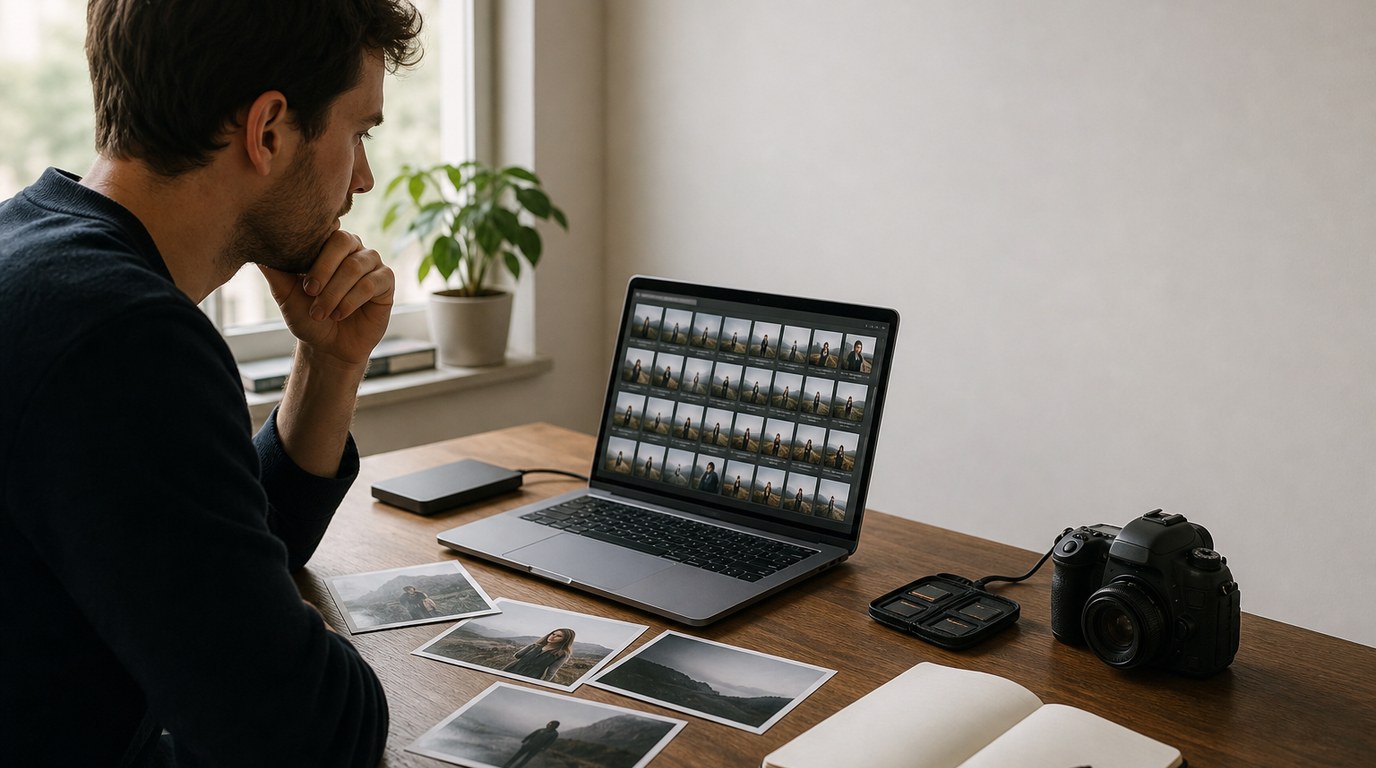
Beginner mistakes are normal. You will miss focus, use the wrong shutter speed, crop awkwardly, forget to check ISO, or come home with photos that looked better on the camera screen than on a computer.
The key is to turn mistakes into information. After each shoot, choose a few photos that did not work and ask why. Was the light too harsh? Was the shutter speed too slow? Did the background distract from the subject? Was the subject unclear?
Do the same with your best photos. Ask what worked so you can repeat it. Progress comes from noticing patterns, not from avoiding mistakes completely.
Simple Beginner Workflow to Follow
Before shooting, check your battery, memory card, ISO, exposure mode, autofocus mode, and image quality setting. Look at the light, choose a subject, and decide what matters most: background blur, frozen motion, deep focus, or low noise.
While shooting, review occasionally for exposure and sharpness. Afterward, select your strongest images, make simple edits, and study what worked. Keep the process repeatable so every shoot teaches you something useful.
FAQ
What Should a Beginner Know First About Things New Photographers Should Know?
A beginner should first know that photography is not mainly about expensive gear. The foundations are light, subject, composition, focus, timing, and basic exposure control. If you learn those early, every camera you use will make more sense.
What Matters Most When Evaluating Things New Photographers Should Know?
The most important factor is whether the advice helps you make better decisions while shooting. Good beginner guidance should explain what to look for, which settings matter, how to practice, and how to learn from mistakes without overwhelming you.
What Mistakes Should Readers Avoid with Things New Photographers Should Know?
Avoid buying too much gear too soon, relying on editing to fix every image, ignoring light, and trying to learn every camera feature at once. Also avoid judging your progress only by individual photos instead of long-term improvement.
What Is the Next Logical Step After Learning About Things New Photographers Should Know?
The next step is focused practice. Pick one skill, such as aperture, shutter speed, window light, or composition, and build a short exercise around it. Shoot, review, adjust, and repeat until the concept becomes natural.