
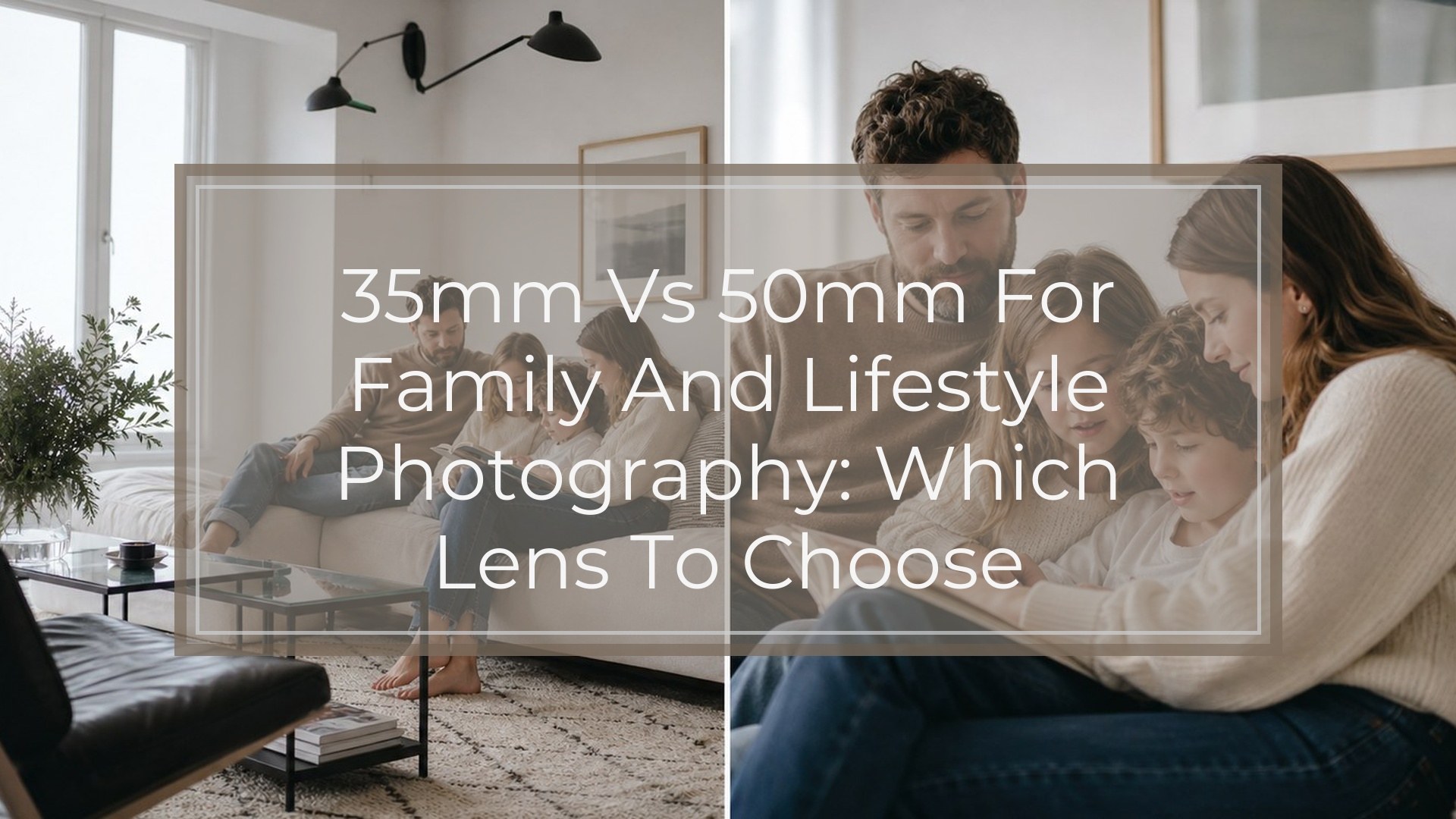
For most family and lifestyle photography, a 35mm lens is the more flexible first choice, especially if you often shoot indoors, photograph children, or want to include the home, activity, and relationships around your subjects. It gives you more room in the frame and usually requires less backing up.
A 50mm lens is better when you want cleaner portraits, stronger background blur, and a simpler composition with fewer distractions. It is often more flattering for individual portraits and quiet moments, but it can feel tight in small rooms or when photographing groups.
The simple rule: choose 35mm if you want storytelling and flexibility; choose 50mm if you want portraits and subject separation. Both can work beautifully, but they encourage different ways of shooting.
| Situation | Better Fit |
|---|---|
| Small rooms, family documentary photos | 35mm |
| Individual portraits with blur | 50mm |
| Kids playing close to you | 35mm |
| Outdoor lifestyle sessions | Either |
| Groups at home | 35mm |
| Cleaner, less busy compositions | 50mm |
The Main Difference: 35mm Tells More of the Story, 50mm Simplifies It
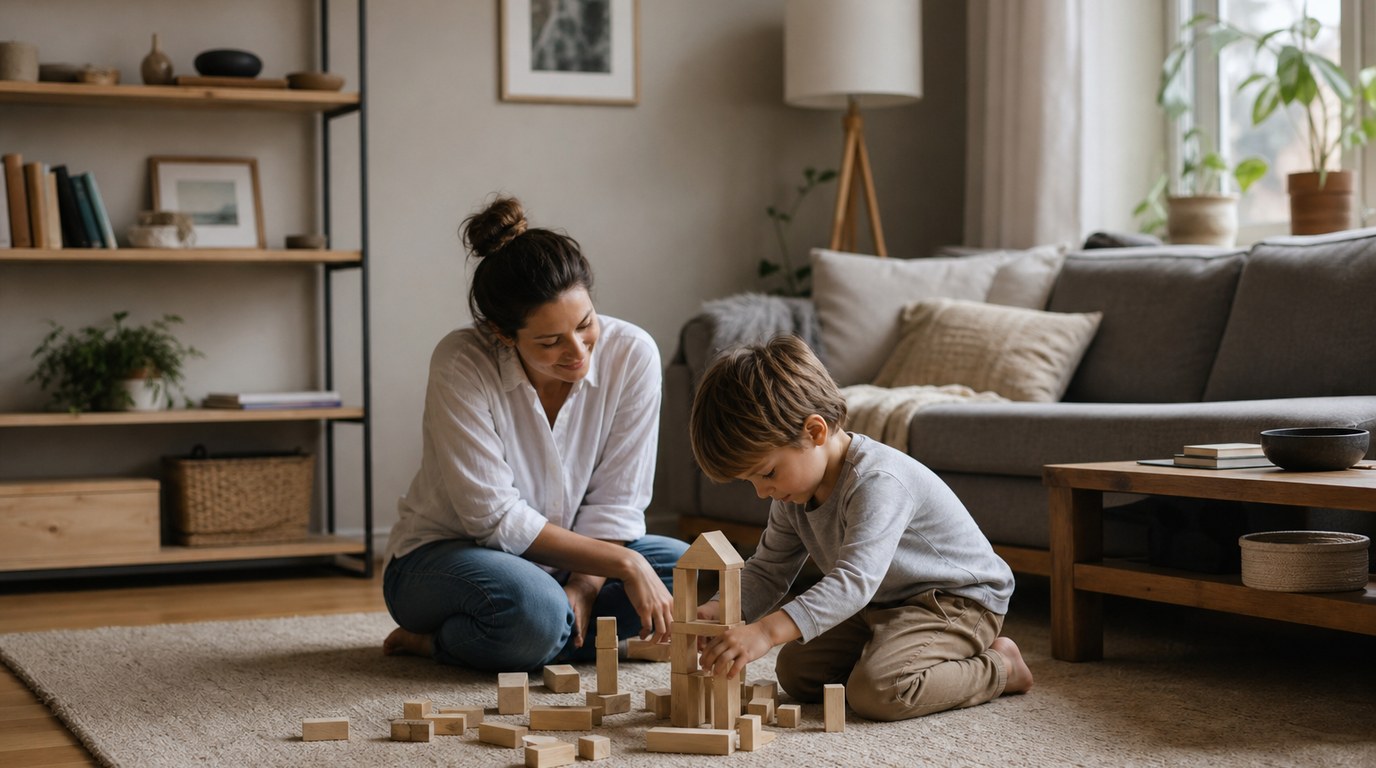
The easiest way to understand 35mm vs 50mm for family and lifestyle photography is this: 35mm includes more context, while 50mm narrows attention.
With a 35mm lens, you can show a child building blocks on the floor, the parent sitting nearby, and the living room environment that makes the image feel personal. It has a documentary feel because it captures the subject and the setting together.
With a 50mm lens, the frame becomes tighter. You might photograph the child’s face, hands, or expression while leaving out much of the surrounding room. This often creates a cleaner, calmer image.
Neither look is automatically better. The 35mm view feels more immersive and story-driven. The 50mm view feels more selective and portrait-focused. Your choice depends on whether you want the viewer to feel “I was there” or “look at this person.”
Field of View and Working Distance
Field of view affects both what fits in the frame and where you have to stand. A 35mm lens sees wider, so you can stay closer to your subjects and still include multiple people or more of the room. This is helpful when photographing families at a kitchen table, siblings on a couch, or a parent holding a baby.
A 50mm lens gives a tighter view. To photograph the same scene, you usually need to step back. Outdoors, that is easy. Indoors, a wall, bed, or furniture may stop you from backing up enough.
Working distance also affects connection. With 35mm, you are often physically closer, which can feel natural with young kids. With 50mm, you can stand slightly farther away, which can help shy subjects relax.
The tradeoff is simple: 35mm gives you space inside the frame; 50mm gives you more visual focus.
Indoor Family Photography: Why 35mm Usually Wins
Indoors is where the 35mm lens has its biggest practical advantage. Homes are usually smaller than photographers expect. Bedrooms, nurseries, kitchens, hallways, and living rooms often do not give you enough distance for a 50mm lens, especially when photographing more than one person.
A 35mm lens lets you capture everyday scenes without constantly stepping backward. You can photograph a parent reading to a child, kids baking, a family pile-on on the bed, or a toddler running through the hallway. It is also easier to include context, which matters in lifestyle photography.
The 50mm can still work indoors for close portraits, details, and quiet moments. It is lovely for a child’s expression near a window or a parent holding a newborn. But for general indoor family coverage, 35mm is usually less frustrating and more useful.
Outdoor Lifestyle Sessions: When Both Lenses Work Well
Outdoors, the choice becomes more balanced because you have room to move. A 35mm lens works well for playful, active, environmental images: families walking, kids running, parents swinging a child, or wide scenes in a park or backyard.
A 50mm lens works well when you want to simplify the background and make the people stand out. It is strong for portraits, hugs, seated family moments, and natural interactions where you do not need to include a lot of scenery.
If the location is meaningful, such as a beach, garden, or family farm, 35mm helps show that place. If the location is busy or distracting, 50mm helps reduce clutter. Outdoors, your creative style may matter more than practicality.
Portraits, Background Blur, and Subject Separation
Many photographers choose 50mm because of the portrait look. At the same aperture, a 50mm lens generally gives stronger background blur and more subject separation than a 35mm lens, especially when you are close to your subject and the background is far away.
This makes 50mm useful for individual portraits, parent-child close-ups, maternity lifestyle images, and simple family photos where faces matter more than the setting. It can also reduce distortion compared with shooting very close on a wider lens.
A 35mm lens can still make beautiful portraits, but it usually includes more of the background. That can be a strength when the environment adds meaning, such as a child in their room or a family on their front porch. Just avoid putting faces too close to the edge of the frame, where wide-angle stretching can be more noticeable.
Candid Moments and Photographing Kids in Motion
For candid family photography, 35mm is often easier because children move unpredictably. They run toward you, jump off furniture, spin, crawl, and change direction quickly. A wider frame gives you more margin for error, so you are less likely to cut off hands, feet, or important action.
The 35mm also lets you stay close to the activity, which can make images feel energetic and involved. It is great for documentary-style shooting where you react quickly instead of carefully posing every frame.
A 50mm lens can be excellent for candids when you have more space or want a quieter perspective. It lets you photograph from slightly farther away, which can help capture natural expressions. But in tight, fast-moving situations, it may feel too narrow.
Full-frame Vs Aps-c: the Choice Changes by Camera Sensor
Sensor size matters because focal lengths look different on different cameras. On a full-frame camera, 35mm behaves like a moderately wide everyday lens, and 50mm behaves like a normal-to-short portrait lens.
On an APS-C camera, the view is tighter because of crop factor. A 35mm lens on APS-C looks roughly like a 50mm lens on full-frame, depending on the brand. That means it may feel less wide than expected indoors. A 50mm lens on APS-C looks closer to a short telephoto portrait lens, which can be very tight for home photography.
So if you use APS-C and want the “35mm lifestyle” look, you may need something closer to 23mm or 24mm. If you use full-frame, the classic 35mm vs 50mm decision is more direct.
Which Lens Should You Buy First?
If you are buying your first prime lens for family and lifestyle photography, start with 35mm if your priority is everyday coverage. It is better for indoor scenes, groups, activities, and storytelling. It is also more forgiving when you cannot control the space.
Choose 50mm first if your main goal is portraits, background blur, and simple compositions. It is often cheaper, lightweight, and capable of beautiful results. For families with older kids or for outdoor sessions, it can be a very satisfying lens.
A helpful test is to look through your recent photos. If you often wish you could fit more into the frame, choose 35mm. If you often crop tighter around faces and want more blur, choose 50mm.
For many family photographers, the ideal kit eventually includes both. But as a first lens, 35mm is usually the safer all-purpose choice.
Simple Shooting Tips for Each Lens
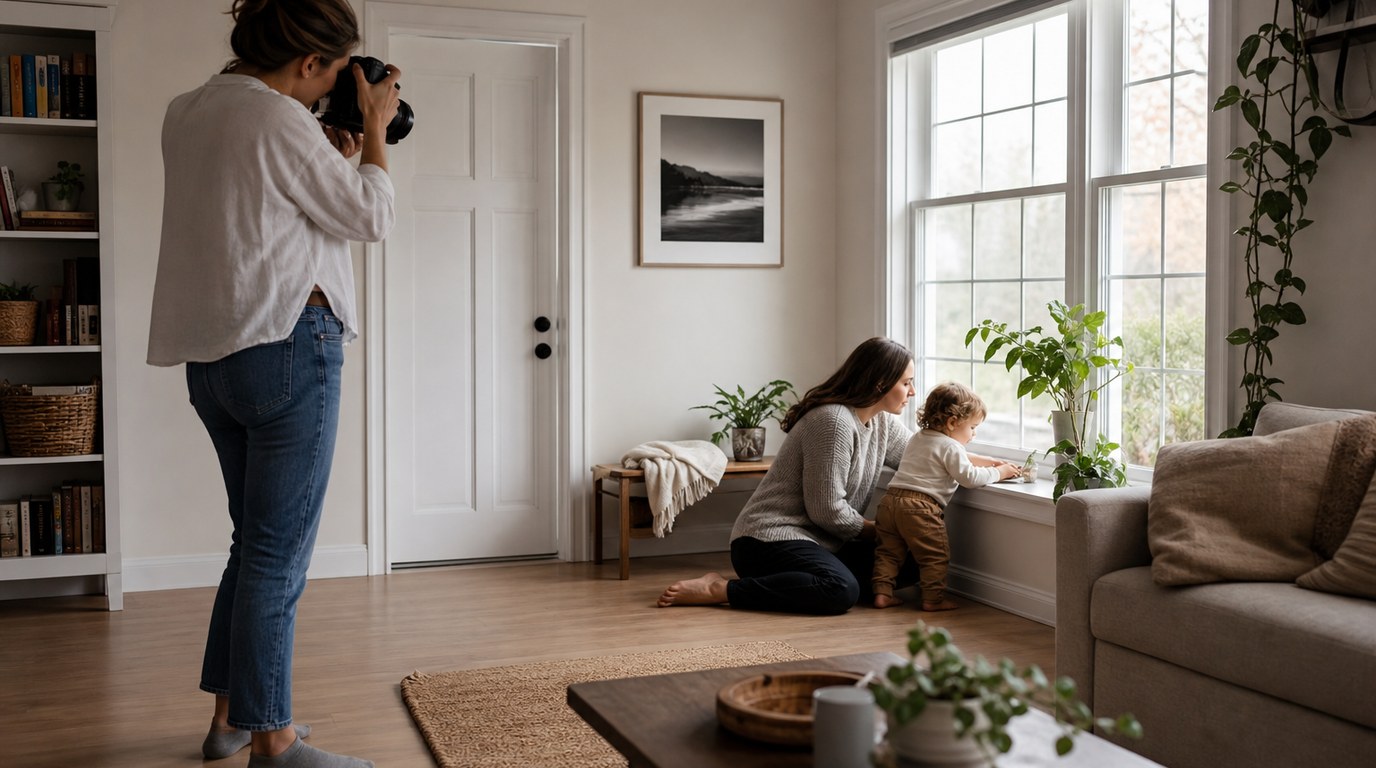
With a 35mm lens, get close enough that your subject still feels important. Because the frame is wider, it is easy to include too much clutter. Watch the edges, keep backgrounds intentional, and avoid placing faces at the extreme corners.
With a 50mm lens, step back before the moment happens. Give yourself room for movement, especially with kids. Use it for portraits, details, and calmer interactions where you can compose more carefully.
For both lenses, focus on expression, light, and timing before worrying about perfect blur. A sharp, emotional family moment will matter more than the focal length used to capture it.
Final Verdict: 35mm or 50mm for Family and Lifestyle Photography?
Choose 35mm for flexibility, indoor family life, groups, movement, and storytelling. Choose 50mm for portraits, stronger background blur, and cleaner compositions.
If you photograph real family routines in homes, 35mm is usually the better first lens. If you mainly want flattering portraits and have enough space to step back, 50mm is a great choice. The best lens is the one that matches how and where your family moments actually happen.
FAQ
What Should a Beginner Know First About 35mm Vs 50mm for Family and Lifestyle Photography?
Beginners should know that 35mm is wider and more flexible, while 50mm is tighter and more portrait-oriented. For family life indoors, 35mm is usually easier. For individual portraits and background blur, 50mm often gives the more polished look.
What Matters Most When Evaluating 35mm Vs 50mm for Family and Lifestyle Photography?
The most important factors are shooting space, subject type, and style. If you photograph small rooms, groups, or active kids, 35mm helps. If you photograph portraits, close interactions, and simple backgrounds, 50mm may fit better.
What Mistakes Should Readers Avoid with 35mm Vs 50mm for Family and Lifestyle Photography?
Avoid buying based only on background blur or popularity. A 50mm lens can feel too tight indoors, while a 35mm lens can include too much clutter if you are careless. Also remember that APS-C cameras make both lenses look tighter.
What Is the Next Logical Step After Learning About 35mm Vs 50mm for Family and Lifestyle Photography?
Review your current photos and notice what frustrates you most. If you are always backing into walls, try 35mm. If your images feel busy and you want cleaner portraits, try 50mm. Renting or borrowing each lens is ideal before buying.