

To pick a theme to inspire your photography, choose a simple idea that gives your next shoot direction without making it feel restrictive. A good theme can be visual, emotional, technical, seasonal, or personal. For example, you might photograph “morning light,” “red objects,” “quiet streets,” “reflections,” or “one lens, one hour.”
The point is not to create a perfect project on day one. The point is to make it easier to notice subjects, make decisions, and keep shooting when you feel stuck. A theme turns “I don’t know what to photograph” into “I’m looking for this kind of image today.”
Quick Answer
The best way to pick a theme to inspire your photography is to start with what you already notice. Look through your recent photos and ask: What subjects, colors, moods, locations, or lighting conditions keep appearing? Those patterns are clues. Your theme should build on your natural curiosity, not fight against it.
A strong beginner-friendly theme usually has three qualities:
| Creative need | Theme idea |
|---|---|
| You feel stuck | Photograph one color for a week |
| You want better light awareness | Shoot only shadows, reflections, or golden hour |
| You want stronger compositions | Focus on frames, leading lines, or negative space |
| You want more emotion | Capture quiet moments, motion, solitude, or joy |
| You want simplicity | Use one lens, one location, or one subject type |
Keep the theme specific enough to guide you, but loose enough to allow surprises. “Street photography” is broad. “People waiting,” “hands at work,” or “red details in the city” gives you something to search for.
A useful theme also works with your real life. If you only have 20 minutes after work, choose something nearby, like window light, kitchen details, neighborhood textures, or evening shadows. The right theme should make shooting feel more possible, not more complicated.
How to Think About This Topic
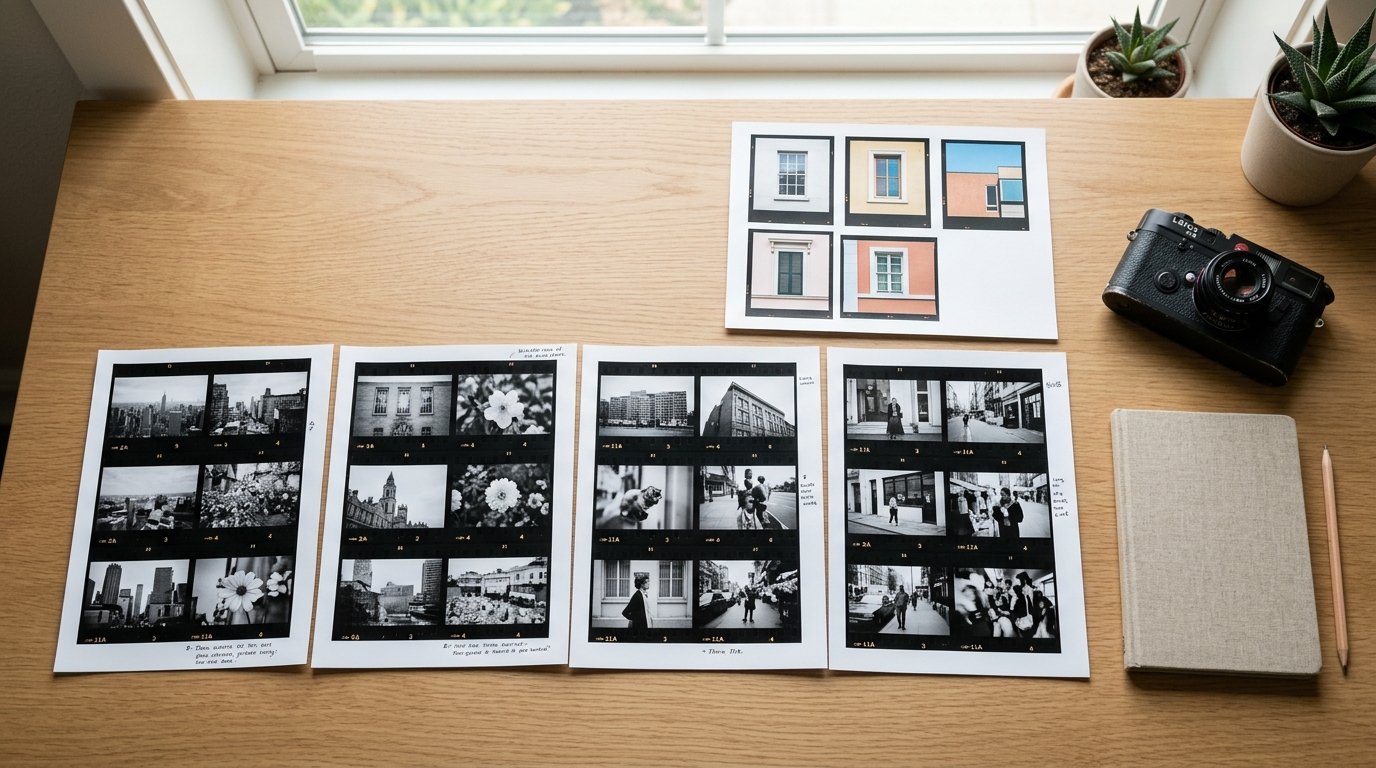
A photography theme is a creative filter. It helps you decide what to pay attention to and what to ignore for a while. Without a theme, every scene competes for your attention. With a theme, you have a simple question in your mind: “Does this fit what I’m exploring?”
That question reduces pressure. You do not need to find the most dramatic subject or travel somewhere special. You only need to look for one idea in different forms. If your theme is “circles,” you might photograph coffee cups, wheels, windows, street signs, plates, and shadows. The theme trains your eye because you begin seeing patterns you usually pass by.
A theme can come from several places:
- Subject: doors, bicycles, pets, markets, trees, hands
- Light: backlight, silhouettes, soft window light, harsh midday sun
- Color: blue, red, earth tones, black and white
- Mood: calm, loneliness, energy, mystery, nostalgia
- Technique: slow shutter speed, shallow depth of field, reflections, close-ups
- Constraint: one lens, one street, one hour, one focal length
The most important mental shift is this: a theme is not a rule you must obey forever. It is a temporary tool. You can use it for one walk, one weekend, one month, or a longer personal project. If it stops helping, adjust it.
For beginners, themes are especially useful because they replace vague creativity with a clear starting point. Instead of asking, “How do I take better photos?” ask, “How can I photograph interesting shadows today?” That smaller question is easier to answer with your camera in hand.
Good themes also improve your editing eye. When you review your images later, you can compare them against the same idea. Which photo expressed the theme best? Which one had the cleanest composition? Which one surprised you? This makes learning more focused.
The goal is not to make every image look the same. The goal is to practice seeing variation inside one idea. Ten photos of “reflections” might include a puddle, a mirror, a shop window, a car door, and a lake. The theme connects them, but each image can still feel different.
Practical Guidance
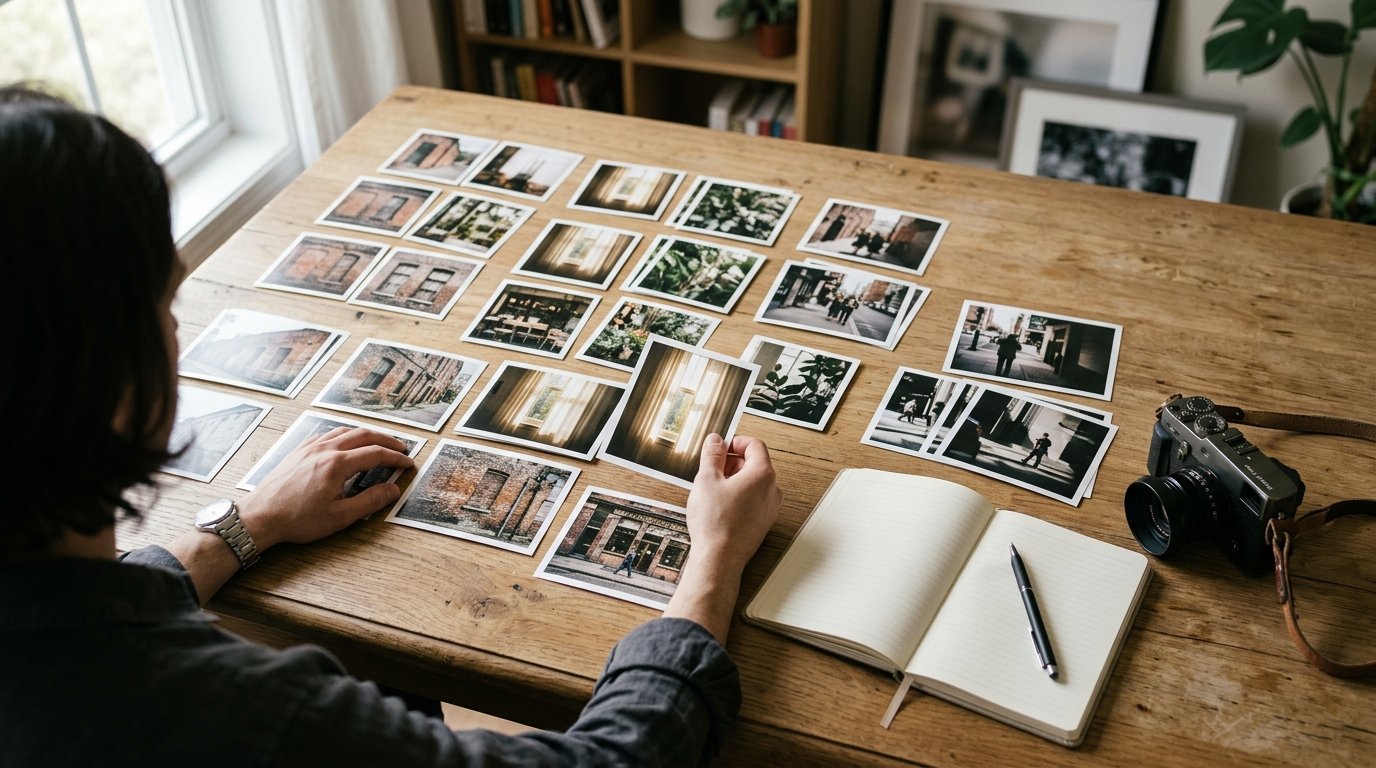
Start by reviewing what you already shoot. Open your camera roll or photo library and look for repeats. Do you keep photographing light through windows, old buildings, flowers, food, pets, people walking, or tiny details? Write down five patterns. One of them can become your next theme.
Next, choose the type of theme that matches your current need. If you want to shoot more often, pick a theme you can find near home. If you want to improve composition, choose a design theme like lines, symmetry, frames, or negative space. If your photos feel flat, choose a light-based theme such as shadows, silhouettes, or reflections.
Then narrow the idea. A broad theme gives too much freedom, while a narrow one gives you momentum. For example:
- Too broad: nature
- Better: leaves after rain
- Too broad: portraits
- Better: people lit by windows
- Too broad: city life
- Better: commuters waiting
- Too broad: color
- Better: yellow objects in ordinary places
Add one or two simple rules. Rules make the project easier to start and easier to finish. You might decide to shoot only in black and white, use one lens, photograph during your lunch break, or take 20 photos before going home. Avoid adding too many rules at once. The theme should guide you, not trap you.
Plan a short shot list, but stay open. If your theme is “morning light,” your list might include light on walls, light through curtains, long shadows, steam from coffee, and backlit plants. This gives you direction when you begin, but you can still react to better opportunities.
Try a small time frame first. A one-day or one-week theme is less intimidating than a year-long project. You can always extend it if it works. Short themes are also helpful because they let you test ideas quickly. If “blue” does not excite you after two walks, switch to “reflections” or “quiet corners.”
After shooting, review your images in a focused way. Pick your best five and ask why they work. Did the theme make the photo stronger? Was the subject clear? Did the background distract? Did the light support the mood? This review step turns a casual exercise into real learning.
If you need a starting prompt, try one of these:
- Photograph one color for seven days.
- Take 15 photos of shadows in your neighborhood.
- Use only one focal length for a walk.
- Capture reflections without photographing mirrors.
- Photograph ordinary objects as if they were important.
- Look for triangles, circles, or repeating patterns.
- Make a mini-series about quiet moments at home.
The best theme is the one that gets you out shooting. It should feel clear enough to start today and flexible enough to keep you curious tomorrow.
FAQ
What Should a Beginner Know First About Pick a Theme to Inspire Your Photography?
A beginner should know that a theme is just a simple guide for what to notice. It does not need to be deep, original, or difficult. Start with something easy to find, such as shadows, one color, reflections, pets, hands, or objects near a window.
What Matters Most When Evaluating Pick a Theme to Inspire Your Photography?
The most important thing is whether the theme helps you take more focused photos. A good theme should be specific, realistic, and interesting to you. If it gives you ideas quickly and works in places you already visit, it is probably a strong choice.
What Mistakes Should Readers Avoid with Pick a Theme to Inspire Your Photography?
Avoid choosing a theme that is too broad, too complicated, or too dependent on perfect conditions. “Beauty” is harder to use than “soft window light.” Also avoid copying a theme you do not care about. Personal interest matters more than sounding impressive.
What Is the Next Logical Step After Learning About Pick a Theme to Inspire Your Photography?
Choose one small theme and shoot it within the next 24 hours. Limit the project to one walk, one room, or one short time period. Afterward, select your best five images and note what worked. Then refine the theme or choose a new one.