
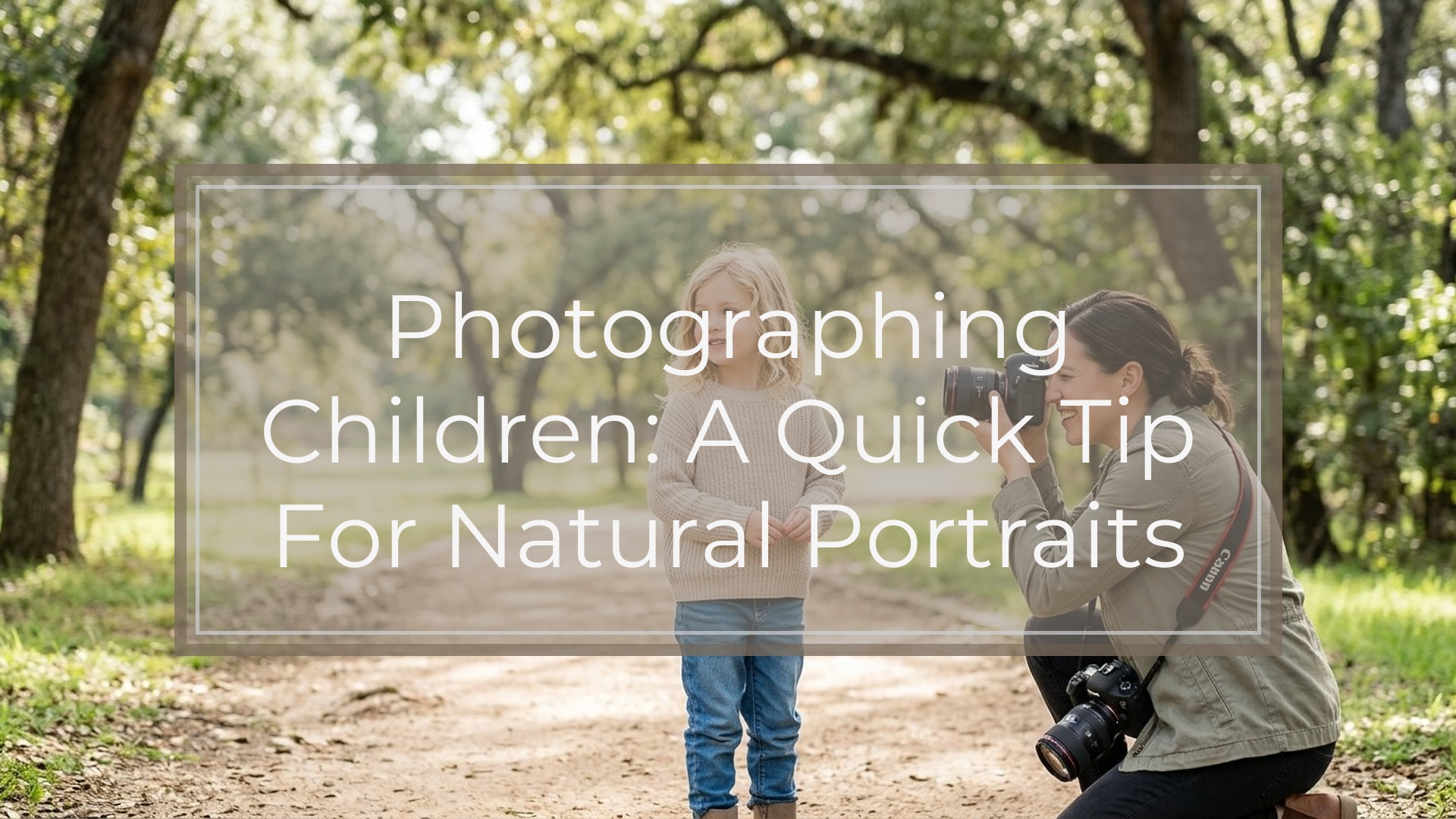
The best quick tip for photographing children is simple: make them comfortable first, then photograph them while they are doing something. Instead of asking a child to stand still, smile, and pose, give them a small activity, game, or object to focus on. When children are busy exploring, playing, or reacting, their expressions become more natural. Your job is to guide the situation lightly, keep your camera ready, and capture the real moments that happen between the “perfect” poses.
Why Natural Child Portraits Start Before You Press the Shutter
Children photograph best when they feel safe, interested, and unpressured. If they feel watched, rushed, or corrected too much, their smile can become stiff quickly.
Before taking photos, spend a minute talking, playing, or letting them explore the space. Keep your tone relaxed. Let them see that the session is not a test. When the child feels comfortable, better expressions happen with less effort.
The Quick Tip: Give Them Something to Do
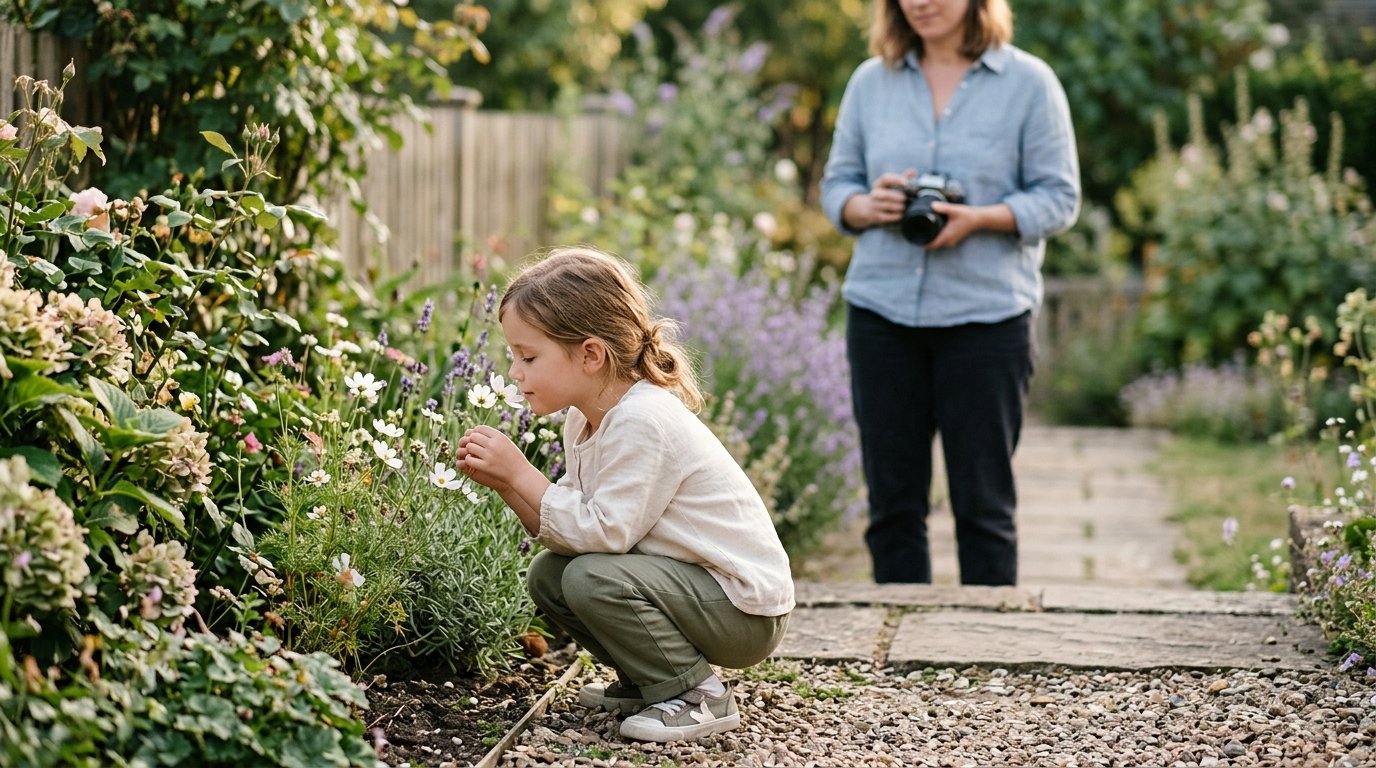
The easiest way to photograph children naturally is to give them a simple activity. Ask them to run toward you, smell a flower, hold a favorite toy, jump off a low step, look for leaves, or whisper a secret to a parent.
This works because the child stops thinking about the camera. Their attention moves to the task, and you get real movement, curiosity, laughter, and concentration. Keep activities short and easy. If it feels like play, the photos will look more relaxed.
Get Down to Their Eye Level
One of the fastest ways to improve child portraits is to lower your camera. Crouch, sit, or kneel so you are closer to the child’s eye level.
Shooting from adult height often makes children look small or distant. Eye-level photos feel more personal because the viewer enters the child’s world. You can still take a few images from above for variety, but start low for natural, connected portraits.
Use Short Prompts Instead of Long Instructions
Children usually do better with short prompts than detailed posing directions. Instead of saying, “Stand here, turn your shoulders, look at me, and smile,” try one clear idea at a time.
Use prompts like:
- “Run to me.”
- “Show me your silly face.”
- “Can you spin once?”
- “Look at your dad.”
- “Hold this leaf up high.”
Short prompts keep the mood light and prevent confusion. If the child ignores the prompt but does something interesting, photograph that too.
Choose Camera Settings That Keep up with Kids
Children move quickly, so your settings should help you freeze motion and react fast. If you are a beginner, use shutter priority mode or aperture priority mode with a fast enough shutter speed.
| Situation | Suggested Setting |
|---|---|
| Sitting or calm child | 1/250 sec or faster |
| Walking or gentle play | 1/500 sec or faster |
| Running or jumping | 1/1000 sec if light allows |
| Blurry background | Wide aperture like f/2.8–f/4 |
| Unpredictable movement | Continuous autofocus and burst mode |
If your photos are blurry, raise the shutter speed before worrying about more advanced settings.
Find Soft Light and Simple Backgrounds
Good light makes natural child portraits much easier. Look for soft, even light rather than harsh midday sun. Open shade, window light, cloudy skies, or the last hour before sunset are all good options.
Also watch the background. A simple background keeps attention on the child’s face and expression. Move a few steps if you see bright clutter, cars, trash cans, or distracting signs behind them. Small changes in position can make the photo feel cleaner.
Capture the In-between Moments
Some of the best child portraits happen after the planned moment. Keep shooting when the child laughs after a prompt, looks at a parent, fixes their hair, hugs a sibling, or pauses quietly.
These in-between moments often feel more honest than the official smile. Do not lower the camera immediately after giving a prompt. Let the moment breathe for a few seconds, because the real expression may arrive right after the “posed” one.
Common Mistakes to Avoid
The biggest mistake is asking for too many smiles. Repeating “Say cheese” often creates tight, unnatural expressions. Another mistake is giving constant corrections, which can make the child feel they are doing something wrong.
Avoid sessions that drag on too long. Children have limited patience, so work quickly and change activities when energy drops. Also avoid forcing eye contact in every frame. Looking away, playing, or interacting with family can create stronger images.
A Simple 5-minute Child Portrait Flow
Here is a quick flow you can use almost anywhere:
- Spend 30 seconds chatting or playing.
- Place the child in soft light with a clean background.
- Start at eye level.
- Give one easy activity, such as walking, spinning, or holding a toy.
- Photograph the action and the moments after it.
- Change the prompt before the child gets bored.
- Finish with a parent, sibling, or favorite object for connection.
This keeps the session moving without feeling rushed or overly posed.
Final Takeaway
Natural child photography is less about perfect posing and more about creating the right conditions. Make the child comfortable, give them something simple to do, and be ready for the moments that happen naturally.
Use fast settings, soft light, short prompts, and a low camera angle. Most importantly, let the child be themselves. When the session feels like play instead of performance, your portraits will show real personality.
FAQ
What Is the Best Quick Tip for Photographing Children?
Give children something to do instead of asking them to pose. Simple activities like running, spinning, holding a toy, or looking for leaves help them relax and forget about the camera.
What Camera Setting Is Best for Photographing Active Children?
Use a fast shutter speed, continuous autofocus, and burst mode. Start around 1/500 second for active children and use 1/1000 second for running or jumping if there is enough light.
How Do I Get a Child to Smile Naturally in Photos?
Do not force the smile. Use playful prompts, silly sounds, small games, or interaction with a parent or sibling. Natural smiles usually happen when the child is reacting to something fun.
Should I Use Flash When Photographing Children?
Use natural light when possible because it feels softer and less distracting. Flash can work if bounced off a ceiling or wall, but direct flash may startle children or create harsh light.